

Most Michigan applicants use the word “disability” to describe some mix of Social Security and employer insurance benefits without realizing those are entirely separate programs run by entirely different institutions.
Social Security Disability Insurance (SSDI) and Supplemental Security Income (SSI) are federal benefits administered by the Social Security Administration.
Long-term disability (LTD) insurance is a private contract, usually issued through an employer or purchased individually, that pays a percentage of income when illness or injury keeps someone out of work.
A Detroit disability lawyer at Goodman Acker, P.C. handles claims involving Social Security and private disability benefits and can determine which benefits, or combination of benefits, may apply to a specific applicant.
Call 248-861-8100 to speak with our Michigan disability attorneys about your situation.
What Does Our Detroit Disability Practice Handle?
Goodman Acker represents disability claimants across Michigan in federal Social Security proceedings and private long-term disability disputes.
The office operates from Southfield with statewide reach for administrative and federal court disability matters, and our Detroit disability lawyer team handles cases from the initial application through hearing and federal appeal.
Categories of Michigan disability cases we handle:
- Initial SSDI and SSI applications and the required medical evidence work
- Reconsideration appeals following an initial denial
- Administrative law judge (ALJ) hearings within the Social Security appeals process
- Appeals Council review and federal district court appeals
- Long-term disability insurance claims and appeals under employer-sponsored ERISA plans
- Long-term disability disputes involving individually purchased policies
Goodman Acker handles Social Security disability claims on a contingency-fee basis, with attorney fees subject to Social Security Administration rules and approval. Fee arrangements for long-term disability matters depend on the applicable agreement.

What Is the Difference Between SSDI, SSI, and Long-Term Disability Insurance?
SSDI, SSI, and long-term disability insurance are three separate programs with different eligibility rules, different funding sources, and different appeal procedures. Missing the requirements or deadlines for one program can delay benefits or affect available appeal rights.
| Program | Who Administers It | Who Qualifies |
| Social Security Disability Insurance (SSDI) | Social Security Administration | Workers with sufficient recent work credits who meet the federal disability definition |
| Supplemental Security Income (SSI) | Social Security Administration | Applicants who meet the disability definition and fall below income and asset limits, regardless of work history |
| Long-Term Disability (LTD) Insurance | Private insurance carrier under the policy terms | Insureds who meet the specific policy’s definition of disability and satisfy the elimination period |
SSDI
SSDI is a federal insurance program funded through payroll taxes. Eligibility depends on the applicant having earned enough recent work credits and being unable to engage in substantial gainful activity due to a medical condition expected to last at least twelve months or result in death.
Michigan applicants file with the Social Security Administration, and medical eligibility is evaluated by Michigan Disability Determination Services (DDS), the state agency that handles the medical review on behalf of the federal government.
SSI
SSI is a needs-based federal program for disabled applicants with limited income and resources. Work history does not drive eligibility. Some Michigan applicants qualify for both SSDI and SSI simultaneously, which affects the total monthly benefit calculation.
Long-Term Disability Insurance
Long-term disability insurance is a private contract. The policy itself defines what “disabled” means, what elimination period applies before benefits start, how long benefits last, and what evidence the insurer requires.
Employer-provided LTD policies are typically governed by the federal Employee Retirement Income Security Act of 1974 (ERISA), which has its own procedural rules that differ significantly from state-court civil practice.
What Conditions Commonly Qualify for Michigan Disability Benefits?
Michigan disability benefits may be available for a wide range of physical and mental health conditions that prevent the applicant from performing substantial gainful activity.
What matters is not the name of the diagnosis but the functional limitations the condition imposes and the strength of the medical documentation.
Conditions we frequently see in Michigan disability files:
- Musculoskeletal disorders including chronic back conditions, degenerative disc disease, and severe joint impairments
- Neurological conditions including traumatic brain injury, stroke, multiple sclerosis, and epilepsy
- Cancer and post-treatment complications limiting stamina and cognitive function
- Cardiovascular conditions including chronic heart failure and coronary artery disease
- Mental health conditions including major depressive disorder, bipolar disorder, PTSD, and anxiety disorders
- Autoimmune and connective tissue disorders including lupus and severe rheumatoid arthritis
Two Michigan applicants with the same diagnosis may receive very different outcomes based on the treating source evidence, the vocational analysis, and the way functional limitations are documented in the medical record.

How Long Does SSDI Take in Michigan and What Happens if You’re Denied?
SSDI processing in Michigan generally takes several months from initial application to first decision, and denied applicants face significantly longer timelines during the appeals process.
The Social Security Administration publishes current processing time information at ssa.gov, and Michigan hearing office backlogs may extend hearing wait times well beyond a year.
Initial Denial and Reconsideration
Most initial SSDI applications receive an unfavorable initial determination. Reconsideration is a required next step in Michigan and other states before an applicant may request a hearing. New medical evidence and updated treating source statements often become important at this stage.
Administrative Law Judge Hearing
If reconsideration is denied, the applicant may request a hearing before an administrative law judge. Michigan hearings take place at Social Security Office of Hearings Operations locations serving the state, and applicants may appear in person, by video, or in some situations by telephone. Representation at the hearing stage can help ensure that the medical, vocational, and other evidence is presented clearly to the administrative law judge.
Appeals Council and Federal Court
Unfavorable ALJ decisions may be appealed to the Social Security Appeals Council, and after that to the United States District Court in the applicant’s federal judicial district. For most Detroit and southeast Michigan applicants, that court is the Eastern District of Michigan.
What Should You Do if Your Long-Term Disability Claim Was Denied?
An LTD denial is not the end of the process, but the ERISA appeal window is short and the administrative record generally closes at the end of the internal appeal.
That timing pressure makes an LTD denial one of the most consequential moments in a long-term disability claim.
Priority moves after receiving an LTD denial letter:
- Read the denial letter carefully and note every deadline referenced in the letter
- Request the complete claim file from the insurer, including all medical reviews and internal notes
- Gather updated medical records and treating source statements before the appeal deadline
- Preserve any employment documentation the insurer used to make the denial decision
- Consult a disability attorney before the internal appeal deadline expires
The internal appeal is generally the last chance to add evidence to the claim file. Federal courts reviewing an ERISA denial typically limit their review to the administrative record that existed when the insurer made its final decision.
To reach our office about a Michigan disability claim, call 248-861-8100.

What Michigan Resources Support Disability Applicants?
Michigan disability applicants navigate a mix of federal and state resources that overlap in confusing ways. Sorting which agency handles what part of the process helps applicants direct their questions to the right place.
Key Michigan-relevant disability resources:
- The Social Security Administration handles all federal SSDI and SSI applications, appeals, and payments
- Michigan Disability Determination Services conducts the medical evaluation on federal claims for Michigan applicants
- The Michigan Department of Health and Human Services (MDHHS) administers state-level Medicaid and other public assistance programs that often work alongside federal disability benefits
- Local Social Security field offices across Michigan handle in-person application support, appointment scheduling, and document submission
- Michigan Rehabilitation Services provides vocational rehabilitation resources for disability applicants exploring return-to-work options
Applicants who understand which agency owns which piece of the process spend less time on hold and more time on the parts of the case that actually affect the outcome.
FAQs for Detroit Disability Lawyer
Can I apply for SSDI and long-term disability at the same time?
Yes, you may apply for SSDI and long-term disability insurance benefits at the same time, and many Michigan applicants do.
Most LTD policies actually require the insured to apply for SSDI, and the interaction between the two benefits, including offsets, is typically addressed in the LTD policy itself.
What if I’ve been out of work for years already?
Maybe. You may still qualify for SSDI even after being out of work for years, but SSDI eligibility depends on having enough recent work credits at the time you became disabled, so gaps in work history may affect eligibility.
SSI is not tied to work history and remains an option for applicants who no longer meet the SSDI insured-status requirement.
Does long-term disability insurance reduce my benefits if I receive SSDI?
Often, yes. Many long-term disability policies allow the insurer to reduce monthly LTD benefits by some or all of the Social Security Disability Insurance benefits the claimant receives.
Some policies also require repayment of an overpayment if SSA later awards retroactive SSDI benefits for months when the insurer already paid full LTD benefits. The exact offset and repayment rules depend on the language of the LTD policy.
Do I have to go to court if my disability claim is denied?
Not usually. Most Michigan disability appeals are resolved administratively within the Social Security appeals process or through the internal ERISA appeal on an LTD claim, without ever reaching federal court.
Federal court review becomes an option only after the administrative process has been exhausted.
Should I hire an attorney for my initial disability application or wait until I’m denied?
It depends. Hiring a disability attorney at the initial application stage may help the medical evidence and vocational analysis be presented well from the start, while waiting until after a denial is a common and workable approach as well.
The right timing depends on the specific medical picture and the strength of the treating source relationships.
Start With the Right Disability Benefit Claim
The most consequential decision on a Michigan disability claim happens before the first application form is filled out: figuring out which benefits, or which combination of benefits, actually apply to the applicant’s situation.
SSDI applicants who ignore an available LTD policy may leave benefits on the table. LTD claimants who never pursue Social Security may also run into policy provisions involving SSDI offsets, reimbursement, or requirements to apply for other available benefits.
Goodman Acker’s Michigan disability attorneys work across both systems and can be reached at 248-861-8100 for questions about a specific claim, denial, or appeal. The starting point is almost never “file more forms” and usually is “confirm the right claim path first.”
Goodman Acker P.C.
Serving Detroit from Our Southfield Headquarters
Two Towne Square, Suite 444
Southfield, MI 48076
Phone:
248-861-8100

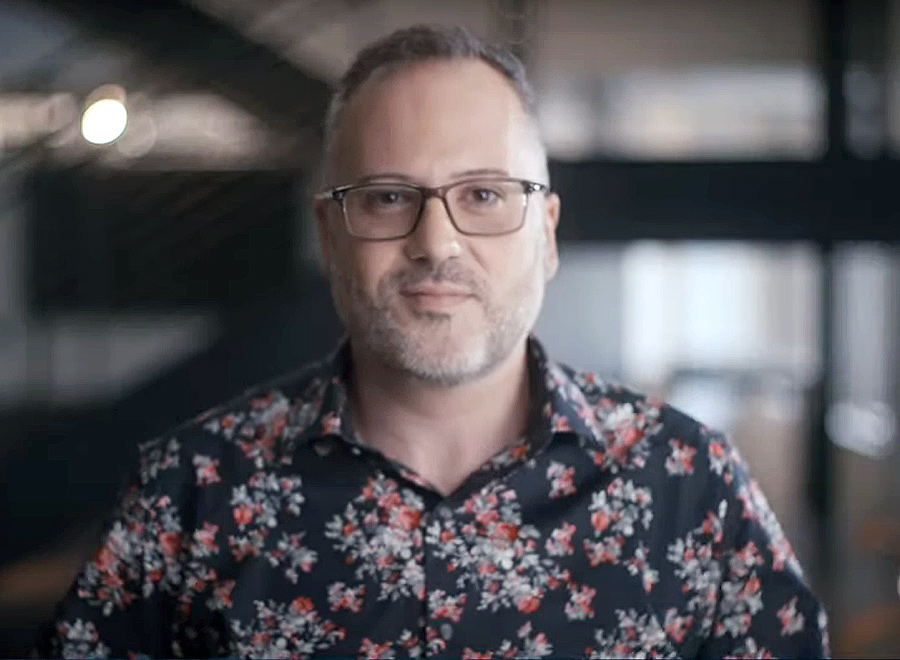
LEGALLY REVIEWED BY BARRY J. GOODMAN
Barry J. Goodman has devoted his professional life to keeping courthouse doors open for victims seeking justice. Always a tireless advocate for his own clients, Goodman sees his responsibility as a Detroit personal injury attorney in a broader sense as well. [ Attorney Bio ]

ABOUT GOODMAN ACKER
Why Choose Us