

The truck that hit you may have been a state fleet vehicle, an MDOT contractor unit, a farm hauler, or a private semi-truck — and each one puts your case on a different legal track.
A Lansing truck accident lawyer at Goodman Acker, P.C. sorts out which category the defendant falls into before anything else, because the notice deadlines for a claim against a state agency are far shorter than the deadlines for a private trucking claim.
Getting that categorization wrong at the front end may cost the entire claim. To speak with our office about a Lansing-area truck crash, call 248-861-8100.
What Kinds of Lansing Truck Accident Cases Does Goodman Acker Take?
Goodman Acker, P.C. represents injured people and families from Lansing, East Lansing, Okemos, Holt, Mason, and the surrounding Ingham, Eaton, and Clinton county communities. Our capital-region truck accident files typically fall into a handful of recurring categories.
Case types we handle in the Lansing area include:
- Semi-truck and tractor-trailer crashes on I-96, I-69, I-496, and US-127
- Crashes involving MDOT contractor vehicles operating on state highway projects
- Collisions with state fleet vehicles, including Michigan Department of Transportation and Michigan Department of Technology, Management and Budget (DTMB) units
- Agricultural transport crashes involving grain haulers, livestock trucks, and equipment movers in the surrounding rural counties
- Delivery truck and box truck collisions in the East Lansing and downtown Lansing commercial districts
- Fatal commercial vehicle crashes requiring wrongful death claims under Michigan law
Every file starts with the same fact-finding step: identifying who owned the truck, who employed the driver, and whether any state or municipal entity has a stake in the case. That answer changes the litigation strategy from day one.
Our fee is contingent on recovery. Our firm may advance case expenses subject to the terms of the fee agreement, and if no recovery is made, no attorney fee is owed.
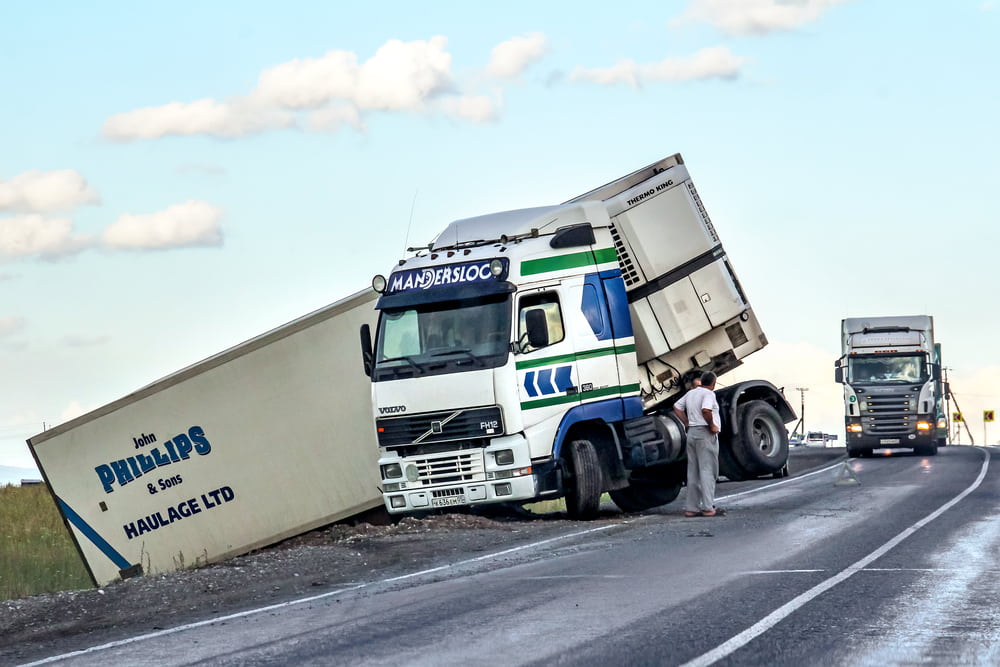
What Happens If a State or Government Vehicle Caused the Lansing Crash?
Claims involving Michigan state agencies, MDOT vehicles, or municipal fleets follow a different set of rules than ordinary commercial vehicle claims.
Michigan’s governmental immunity laws limit when state and local entities may be sued, and some government-related claims carry special notice requirements. Claims against the State of Michigan, for example, generally require compliance with the Court of Claims notice statute.
The Governmental Notice Requirement
Under Michigan’s governmental tort liability act (MCL 691.1401 et seq.), certain claims against governmental entities require written notice served on the responsible agency within a set window after the injury. Missing the notice window may bar the claim entirely, regardless of how strong the underlying liability facts are.
The table below outlines general notice categories that may apply in a Lansing truck accident case. Actual deadlines depend on the specific claim theory and the identity of the defendant, and only a review with counsel confirms the window that applies to a given case.
| Defendant Category | General Framework |
| State of Michigan or state agency | Claim generally proceeds in the Michigan Court of Claims with statutory notice requirements |
| MDOT vehicle operated by a state employee | Governmental notice rules and possible motor vehicle exception analysis apply |
| MDOT contractor (private company on state project) | Ordinary commercial claim rules apply against the contractor itself |
| County road commission vehicle | Governmental notice may apply, with venue typically in the county circuit court |
| City or township vehicle | Governmental notice may apply, with additional local ordinance requirements |
| Private commercial motor carrier | Standard Michigan negligence limitations period applies, no governmental notice |
The Motor Vehicle Exception
Michigan’s governmental immunity framework contains a motor vehicle exception that allows certain claims against state and local entities for negligent operation of government-owned vehicles.
Whether the exception applies in a given case turns on facts about the vehicle, the driver’s employment status, and the scope of the driver’s duties at the time of the crash.
Who May Be Held Liable in an Ingham County Commercial Vehicle Crash?
Liability in an Ingham County commercial vehicle case often reaches beyond the driver to companies and entities involved in the operation of the truck.
Identifying every responsible party protects the injured person from being capped at a single defendant’s inadequate insurance limits.
Parties commonly named in Lansing-area truck accident cases include:
- The truck driver, for negligent operation of the vehicle
- The motor carrier that employed the driver, for negligent hiring, training, or supervision
- The shipper or agricultural operation that loaded the cargo, for improper loading
- Maintenance contractors, for faulty repairs or missed inspections
- Freight brokers, for negligent selection of an unsafe carrier
- Government entities and their contractors, where a state fleet or public works vehicle was involved
- Vehicle or component manufacturers, for defective brakes, tires, or safety systems
Naming the right combination of defendants is often what turns a modest recovery into one that actually reflects the injuries the crash caused.
What Federal Rules Govern Commercial Trucking Cases?
Federal trucking regulations from the Federal Motor Carrier Safety Administration (FMCSA) apply to virtually every interstate commercial motor carrier operating on Lansing-area freeways. Violations of these rules by a driver or carrier often form the core evidence in an Ingham County truck accident case.
Areas of federal regulation that commonly matter in trucking claims include:
- Hours of service (HOS) rules governing how long a driver may operate before mandatory rest
- Electronic logging device (ELD) requirements requiring automatic recording of driving time
- Driver qualification rules covering commercial licensing, medical certification, and training
- Drug and alcohol testing rules requiring post-accident testing in qualifying crashes
- Vehicle inspection, repair, and maintenance rules
A documented federal violation often shifts the negotiation dynamics of the case. Carriers negotiate differently when regulatory records tie their conduct directly to the harm the plaintiff suffered.
What Records Get Requested First in a Lansing Truck Accident Case?
Records requests go out to the carrier and any relevant government entities early, before those records get purged under federal retention rules or lost to routine turnover. The record set for a Lansing-area case often looks different from a Detroit case because of the mix of state, contractor, and private defendants.
Priority records in a Lansing truck accident case include:
- The tractor’s electronic control module data, capturing speed and braking behavior before impact
- Driver hours-of-service logs and ELD records covering the days leading up to the crash
- Dispatch and routing records showing what the driver was ordered to do
- Drug and alcohol post-accident test results, plus the testing chain of custody
- Maintenance and inspection records for the tractor and trailer
- State agency incident reports and internal investigation files, if a government vehicle was involved
- MDOT contract documents showing scope of work, if the truck was operating on a state project
Building the record base fully at the start prevents defense counsel from later arguing that gaps in evidence prove there was no violation to document.
How Does Michigan No-Fault Apply to a Truck Crash Around Lansing?
Michigan’s no-fault law may apply after a commercial truck crash, depending on factors such as the injured person’s circumstances, the vehicles involved, and the available insurance coverage.
Personal injury protection (PIP) benefits generally pay medical care and wage-loss benefits regardless of fault, subject to the coverage level the injured person selected under Michigan’s tiered no-fault system.
Third-party claims against the at-fault motor carrier or driver proceed separately when the injured person meets Michigan’s serious impairment threshold. Common categories of recovery in a Lansing capital region truck accident case:
PIP Benefits
PIP benefits pay first for reasonable and necessary medical care, attendant care, and lost wages during the initial disability period, subject to the coverage limits selected under the injured person’s policy.
Third-Party Bodily Injury Claim
The third-party claim against the at-fault carrier or driver seeks pain and suffering damages, excess wage loss beyond the PIP cap, and other damages Michigan no-fault does not cover.
Uninsured or Underinsured Motorist Coverage
Coverage under the injured person’s own auto policy may apply when the at-fault driver had no insurance or when policy limits fall short of the harm caused.
How Long Do You Have to File a Lansing Truck Accident Lawsuit?
The filing window for a Lansing truck accident lawsuit depends heavily on who the defendant is. A claim against a private motor carrier follows one set of deadlines. A claim against a state agency, county road commission, or municipal fleet follows a much shorter one.
General deadline categories that may apply to a Lansing-area case:
- Claims against private commercial motor carriers generally follow the three-year Michigan negligence limitations period under MCL 600.5805
- Claims against the State of Michigan generally proceed in the Michigan Court of Claims with statutory notice requirements measured in months
- Claims against county road commissions and municipal entities are subject to Michigan’s governmental immunity rules, and additional notice requirements may apply depending on the legal theory involved.
- Wrongful death claims under MCL 600.2922 require appointment of a Personal Representative before the lawsuit is filed
- Claims involving out-of-state carriers may raise venue and jurisdictional questions that affect the filing plan
Because governmental notice deadlines run in months rather than years, an early consultation matters more in a case with any state-agency angle than in an ordinary commercial trucking case.
FAQs for Lansing Truck Accident Lawyer
What happens if the truck driver who hit me was a state employee?
Yes, you may still have a claim if the truck driver who hit you was a state employee, but the case follows different rules than a private trucking claim. Michigan’s motor vehicle exception to governmental immunity may permit recovery, and written notice may need to be served on the responsible state agency within a short statutory window.
Do I sue in Ingham County or somewhere else for a Lansing truck crash?
It depends. A claim against a private motor carrier for a crash in Ingham County generally proceeds in Ingham County Circuit Court, while a claim against the State of Michigan generally proceeds in the Michigan Court of Claims regardless of where the crash occurred.
Who pays for my medical care after an East Lansing truck accident?
Your medical care after an East Lansing truck accident is generally paid first through Michigan no-fault PIP benefits, subject to the coverage level you selected under your own auto policy. Additional recovery may come through the third-party claim against the responsible motor carrier.
What if a farm truck or agricultural hauler hit me in Ingham or Clinton County?
Yes, you may pursue a claim against a farm truck or agricultural hauler that caused a Lansing-area crash. Agricultural operations sometimes qualify for limited exemptions from certain federal trucking rules, but negligence liability and Michigan no-fault requirements still apply to on-road crashes.
Do I need to hire a lawyer in Lansing, or does the office location matter?
No, you do not need to hire a lawyer physically based in Lansing to handle your Ingham County truck accident case. Michigan attorneys practice statewide, and remote intake, video meetings, and travel to local hearings keep the case moving without a physical Lansing office.
Map Your Notice Deadlines Before They Close on Your Lansing Truck Accident Claim
The shortest deadline in a Lansing truck accident case is often the one nobody warns you about — the governmental notice window that may apply if a state or municipal vehicle was involved.
Missing it forecloses the claim, even where the underlying negligence facts are strong. Sorting the defendant category early is the single most consequential decision in a capital-region truck case.
Goodman Acker, P.C. represents Lansing, East Lansing, and greater Ingham County clients in commercial vehicle claims from our Southfield office.
Call 248-861-8100 to speak with a Lansing truck accident lawyer about identifying the correct defendant category and confirming the notice deadlines that apply to your case.
Goodman Acker P.C.
Serving Detroit from Our Southfield Headquarters
Two Towne Square, Suite 444
Southfield, MI 48076
Phone:
248-861-8100

LEGALLY REVIEWED BY BARRY J. GOODMAN
Barry J. Goodman has devoted his professional life to keeping courthouse doors open for victims seeking justice. Always a tireless advocate for his own clients, Goodman sees his responsibility as a Detroit personal injury attorney in a broader sense as well. [ Attorney Bio ]


GOODMAN ACKER
Meet our Personal Injury Attorneys