
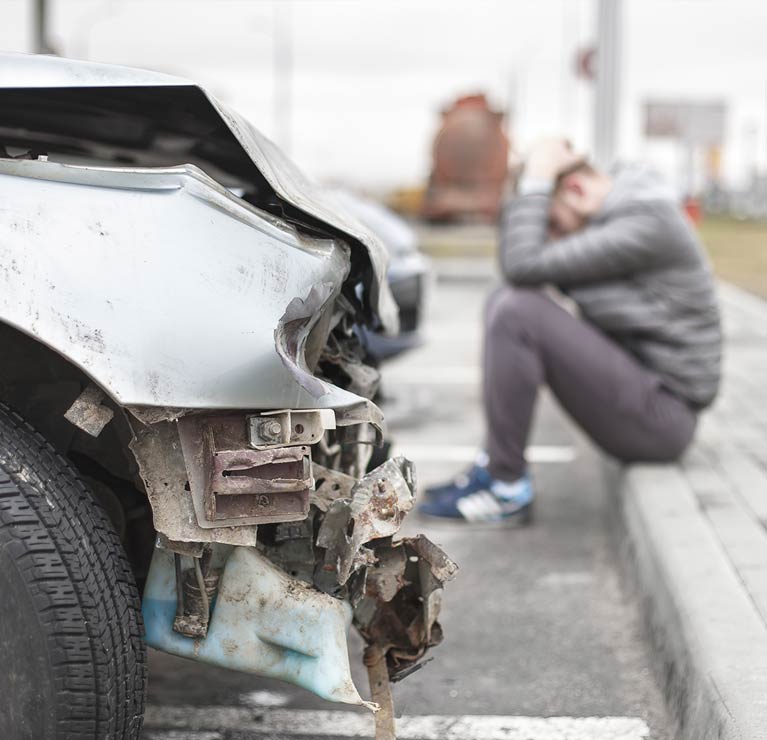
There is a unique sense of peace that comes with driving along Muskegon’s shoreline. On a clear day, with Lake Michigan stretching out to the horizon, the familiar drive to Pere Marquette Park is a reminder of why you live here.
The rhythm of life in West Michigan feels steady, predictable, and safe. You expect the summer traffic on Seaway Drive and the quiet stillness of a winter morning on Sherman Boulevard. What you never expect is for that peace to be violently stolen from you.
In the seconds it takes for another driver to look at their phone or run a red light, your world is upended. A disorienting silence follows the jarring impact, then the slow realization of what just happened. Now, back at home, the physical pain is a constant reminder, but it is the growing chaos that truly unsettles you.
Bills from Mercy Health arrive, an adjuster from the other driver’s insurance company is calling with pointed questions, and the financial pressure of being unable to work is becoming a heavy weight.
You are left feeling that the person who caused the crash is moving on with their life, while you are left to deal with the consequences. This is not a burden you should have to carry alone while you are trying to heal.
A Muskegon car accident lawyer can step in to manage the fight for fair compensation, allowing you to focus on your recovery. Our firm operates on a contingency fee basis, so your first step toward protecting your rights costs you nothing. We do not get paid unless we secure a recovery for you.
What Should My First Steps Be After a Car Accident?
Once you are home, the actions you take can build a strong foundation for your injury claim. Your immediate next steps should be focused on your health and on organizing the facts of your case.

Follow the doctor’s treatment plan
Your top priority is your physical recovery. Following every instruction from your medical providers is essential for your health. From a legal perspective, it also creates an official record of your injuries and their severity.
When you attend all follow-up appointments, fill your prescriptions, and participate in physical therapy, you are creating proof of the harm you have suffered. This documentation counters any attempt by an insurance company to argue that you are not as injured as you claim.
Organize accident-related documents
Creating a dedicated file for all paperwork is a simple but powerful step. This file becomes the central source of evidence for your financial losses.
Your file should include:
- The police report from the accident.
- The other driver’s insurance information.
- All bills, receipts, and explanations of benefits from doctors and hospitals.
- Pay stubs or income statements to document your lost wages.
- Receipts for any out-of-pocket expenses, like prescription medications.
This organized record helps ensure that every single loss is accounted for when building your claim.
Don’t talk to the other driver’s insurance company
The at-fault driver’s insurance adjuster may contact you quickly. Their job is to protect their company’s bottom line by minimizing the value of your claim. You are not obligated to provide them with a recorded statement.
These statements can be used to find inconsistencies in your story or to get you to say something that could weaken your case. Your best next step is to direct them to your attorney, who can handle all communications on your behalf.
How Does Michigan’s No-Fault Law Affect My Claim?
Michigan has a unique and often confusing auto insurance system. After a crash, you must first turn to your own insurance policy for certain benefits before you can pursue the at-fault driver.
Initial benefits
Your own auto insurance policy is your first source of benefits for your economic losses. This is paid through your Personal Injury Protection (PIP) coverage. PIP is a mandatory coverage in Michigan and pays for your losses regardless of who was at fault for the crash.
Your PIP benefits may include:
- Payment for all reasonable and necessary medical expenses, up to your chosen policy limit.
- Up to 85% of your lost wages for a maximum of three years.
- Up to $20 per day in replacement services for help with household chores.
The serious impairment threshold
To step outside the No-Fault system and file a lawsuit against the negligent driver for non-economic damages, your injury must meet a specific legal standard. This is the serious impairment of body function threshold.
This legal term refers to an injury that is medically identifiable and affects your general ability to lead your normal life. A minor injury that heals quickly may not meet this standard.
However, an injury that requires surgery, causes long-term limitations, and changes your ability to work or enjoy your life likely will.
Can I file a claim against the at-fault driver?
Once you meet the serious impairment threshold, you can file a third-party liability claim. This is a lawsuit against the driver who caused the crash and their insurance company. This is the legal action that pursues compensation for the losses your own PIP policy does not cover, most notably your pain, suffering, and emotional distress.
How is Fault Determined in a Muskegon Car Crash?
Even in a No-Fault state, determining who was at fault is a central part of any serious injury claim. This determination is based on the legal principle of negligence.
Legal standard of negligence
Negligence is the failure to use reasonable care, resulting in harm to another person. To prove the other driver was negligent, we must establish four things. First, that they owed you a duty to drive safely.
Second, they breached that duty by doing something like speeding or texting. Third, that their breach directly caused the crash. Finally, that you suffered injuries and financial losses as a result.
Michigan’s comparative fault rule
In some cases, an insurance company may argue that you were partially to blame for the accident. Michigan follows a modified comparative fault rule. This means a jury may assign a percentage of fault to each driver.
You can still recover damages as long as your share of the fault is 50% or less. However, a court will reduce your final recovery by your percentage of fault. For example, if you are found 10% at fault, your final award will be reduced by 10%. If you are found 51% or more at fault, you are barred from recovering any compensation for pain and suffering.
How do I get my car repaired?
If the other driver was more than 50% at fault, you can pursue a mini-tort claim to recover money for your vehicle damage. Under Michigan law, the maximum you can recover through a mini-tort claim is $3,000. This often does not cover the full cost of repairs, so you may also need to file a claim with your own collision coverage if you have it.
Why Choose Our Firm to Handle Your Muskegon Accident Case?
The attorney you choose after a car accident can make a significant difference in your recovery. You need a legal team with a deep knowledge of Michigan law and a genuine commitment to the people they serve.
At Goodman Acker PC, we provide:
- A focus on West Michigan: We are not a firm that treats Muskegon as an afterthought. Our presence in West Michigan means we are familiar with the local court system, the specific traffic patterns on your roads, and the challenges facing your community.
- A deep understanding of no-fault law: The complexities of PIP benefits, the serious impairment threshold, and third-party claims require a knowledgeable legal team. We have been helping Michigan residents with these issues for decades.
- The resources to build a strong case: We commit the necessary resources to investigate your accident thoroughly. This includes gathering police reports, interviewing witnesses, and, when needed, working with accident reconstructionists to prove what happened.
- A commitment to you and your family: We know you are going through one of the most difficult times of your life. Our team is dedicated to providing clear communication, answering your questions, and handling the legal burdens so you can focus on healing.
Where Do the Most Dangerous Accidents Happen in Muskegon County?
While a car accident can occur on any street, certain roads and intersections in the Muskegon area present a higher risk due to their design, traffic volume, and the types of driving behavior they encourage.
Recognizing these specific danger zones is part of building a strong case. It shows how a driver’s negligence was not just a random act, but a failure to adapt to predictable local hazards.
Intersection collisions on busy roads
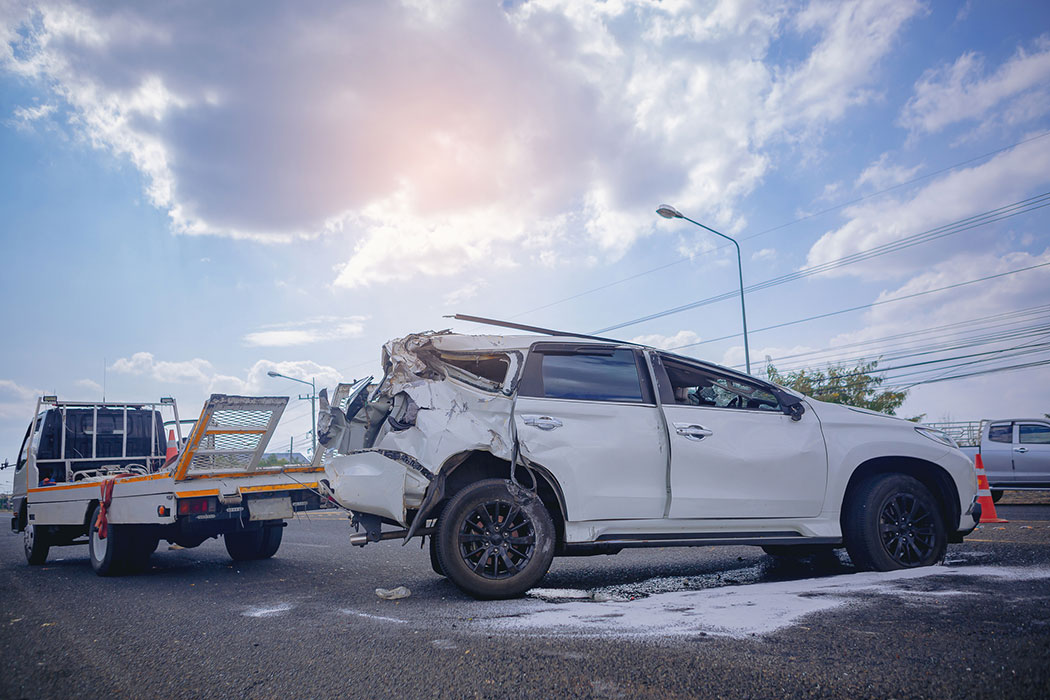
Major arteries like Sherman Boulevard and Getty Street are the lifeblood of Muskegon, but their numerous intersections are frequent sites of serious T-bone and failure-to-yield collisions.
The mix of commercial traffic, commuters, and local residents creates a complex environment where a moment of inattention can have severe consequences.
Drivers who are distracted by their phones, rushing to beat a yellow light, or who simply misjudge the speed of oncoming traffic can cause devastating right-angle crashes.
These collisions often result in severe injuries because the point of impact is directly on the passenger side of a vehicle, offering little protection.
Rear-end accidents on Seaway Drive
Seaway Drive is a critical route, connecting the lakeshore and industrial areas to downtown and US-31. The traffic flow is often dense and prone to sudden stops, especially during the summer tourist season or near shift changes for major employers.
These conditions are a recipe for chain-reaction rear-end accidents.
These crashes are almost always caused by a driver who is following too closely or not paying attention to the traffic ahead.
A driver who is looking at a GPS or is otherwise distracted may not notice that traffic has slowed until it is too late to stop safely. The force of these impacts can cause significant vehicle damage and painful injuries.
High-speed crashes on US-31
The US-31 bypass around Muskegon is designed for high-speed travel, but that speed magnifies the consequences of any driver error. Unsafe lane changes, speeding, and driver fatigue are common factors in the serious collisions that occur on this highway. A driver who weaves through traffic or fails to check their blind spot can easily clip another vehicle, potentially causing a rollover or a multi-car pileup.
Because of the high speeds, the injuries sustained in these accidents are often catastrophic. Investigating these crashes involves analyzing physical evidence like skid marks and vehicle debris to reconstruct the sequence of events and prove how a driver’s reckless actions led directly to the collision.
FAQ for a Muskegon Car Accident Lawyer
What if the driver who hit me was uninsured?
If an uninsured or underinsured driver injured you, you may still have options. If you purchased Uninsured/Underinsured Motorist (UM/UIM) coverage on your own policy, you can file a claim with your own insurance company to recover the damages the at-fault driver should have paid.
How long do I have to file a lawsuit in Michigan?
The statute of limitations for filing a personal injury lawsuit in Michigan is generally three years from the date of the accident. This deadline is set by the Michigan Legislature and is very strict. If you miss it, you will likely lose your right to pursue compensation.
Do I have to pay to speak with an attorney?
No. Our firm offers a free initial consultation to discuss your case. We will listen to what happened, explain your legal options, and answer your questions without any cost or obligation. We also handle cases on a contingency fee basis, so you pay no attorney fees unless we win your case.
Your Recovery is Our Priority
The aftermath of a car accident is a period of stress and uncertainty. Your focus should be on your physical and emotional recovery, not on fighting with insurance adjusters. Let us take that weight off your shoulders.
The team at Goodman Acker PC is here to provide the guidance and advocacy you need to move forward. We will handle every aspect of your legal claim while you concentrate on getting your life back.

LEGALLY REVIEWED BY BARRY J. GOODMAN
Barry J. Goodman has devoted his professional life to keeping courthouse doors open for victims seeking justice. Always a tireless advocate for his own clients, Goodman sees his responsibility as a Detroit personal injury attorney in a broader sense as well. [ Attorney Bio ]


GOODMAN ACKER
Meet our Personal Injury Attorneys