

A crash with a semi-truck can change a family’s life in seconds, and the trucking company’s response often begins before you have even left the hospital. You need someone protecting your interests just as quickly.
Goodman Acker, P.C. represents people injured in truck and commercial vehicle crashes across Detroit and Wayne County.
The Detroit truck accident lawyers at Goodman Acker, P.C. pursue claims against the full range of responsible parties, from the driver and motor carrier to companies that loaded or maintained the truck.
If you or a loved one was hurt in a crash involving a semi, delivery truck, or other commercial vehicle, contact Goodman Acker to talk about your next steps.
How Goodman Acker Handles Detroit Truck Accident Cases

Truck and commercial vehicle crashes are among the practice areas Goodman Acker, P.C. focuses on, alongside the car accident cases at the center of our firm. From our Southfield office, our team represents people injured in truck crashes throughout Detroit and metro Detroit.
Our work on a Detroit truck accident case typically includes:
- Sending preservation letters to the carrier as early as possible
- Obtaining ELD data, driver logs, maintenance files, and the driver qualification file
- Identifying every company connected to the truck, its load, and its maintenance
- Coordinating your no-fault benefits with the claim against the trucking company
- Preparing the case for trial in Wayne County Circuit Court or federal court when needed
Every case depends on its specific facts, and no lawyer can promise a particular outcome. What we can offer is a thorough investigation built to address the evidence and defenses trucking companies bring to these cases.
If you were injured in a crash with a truck in Detroit, contact Goodman Acker to discuss your case with our team.

Why Are Detroit Truck Accident Cases Different From Car Accident Claims?
Truck accident cases involve federal safety regulations, commercial insurance policies, and multiple companies that may share responsibility.
These factors can create more ways to prove fault and identify sources of compensation. They can also mean there is more evidence to preserve and review quickly.
Michigan’s no-fault system still applies, so an injured person usually claims personal injury protection (PIP) benefits through their own household auto policy first.
A separate claim against the truck driver and the companies behind the truck opens up when the injury meets the serious impairment threshold in MCL 500.3135, or when losses exceed what PIP pays.
Higher Insurance Limits on Commercial Trucks
Interstate motor carriers hauling general freight must carry at least $750,000 in liability coverage under federal financial responsibility rules. Many carriers carry more, which matters when serious injuries create losses far beyond a typical auto policy.
Who Can Be Held Responsible for a Detroit Truck Crash?
Several parties can share responsibility for a truck crash, and identifying each one affects how much coverage is available. Depending on the facts, responsible parties may include:
- The truck driver, for speeding, distraction, impairment, fatigue, or unsafe lane changes
- The motor carrier, for the driver’s conduct on the job and for its own hiring, training, and supervision decisions
- The truck or trailer owner, under Michigan’s owner liability statute, MCL 257.401, when the vehicle was driven with the owner’s permission
- The shipper or loading company, when it created a hidden loading defect that the carrier or driver could not reasonably discover before transport
- A maintenance contractor, when brake, tire, or lighting work was done poorly
- A parts manufacturer, when a defective component such as a brake system or tire failed
Each responsible party may have its own insurer and lawyers. Identifying all potentially responsible parties early can help determine who should be included in the claim and which insurance coverage may be available.
Which Federal Trucking Rules Matter Most in an Injury Claim?
Federal Motor Carrier Safety Administration (FMCSA) regulations set the safety rules that interstate truck drivers and carriers must follow. When a driver or carrier breaks one of these rules, the violation can be strong evidence that the crash was preventable.
Hours of Service and Driver Fatigue
The hours-of-service rules limit how long property-carrying drivers can drive and work before resting. The core limits are summarized below:
| Hours-of-service rule | General limit for property-carrying drivers |
|---|---|
| Daily driving limit | 11 hours of driving after 10 consecutive hours off duty |
| On-duty window | No driving beyond the 14th hour after coming on duty |
| Required break | A 30-minute break after 8 cumulative hours of driving |
| Weekly limit | 60 hours in 7 days or 70 hours in 8 days, depending on the carrier’s schedule |
Electronic logging device (ELD) data, fuel receipts, and dispatch records often show whether a driver was pushing past these limits before the crash.
Cargo Securement and Overloading
Federal rules require cargo to be secured so it cannot shift or fall from the truck. Shifting loads can cause rollovers and jackknifes, while overweight trailers take longer to stop and put extra strain on brakes.
Inspection and Maintenance Requirements
Carriers must systematically inspect, repair, and maintain their trucks and keep records of that work. Brake failures, worn tires, and broken lights often trace back to skipped inspections or deferred repairs that show up in the maintenance file.
Detroit Truck Corridors and Cross-Border Traffic
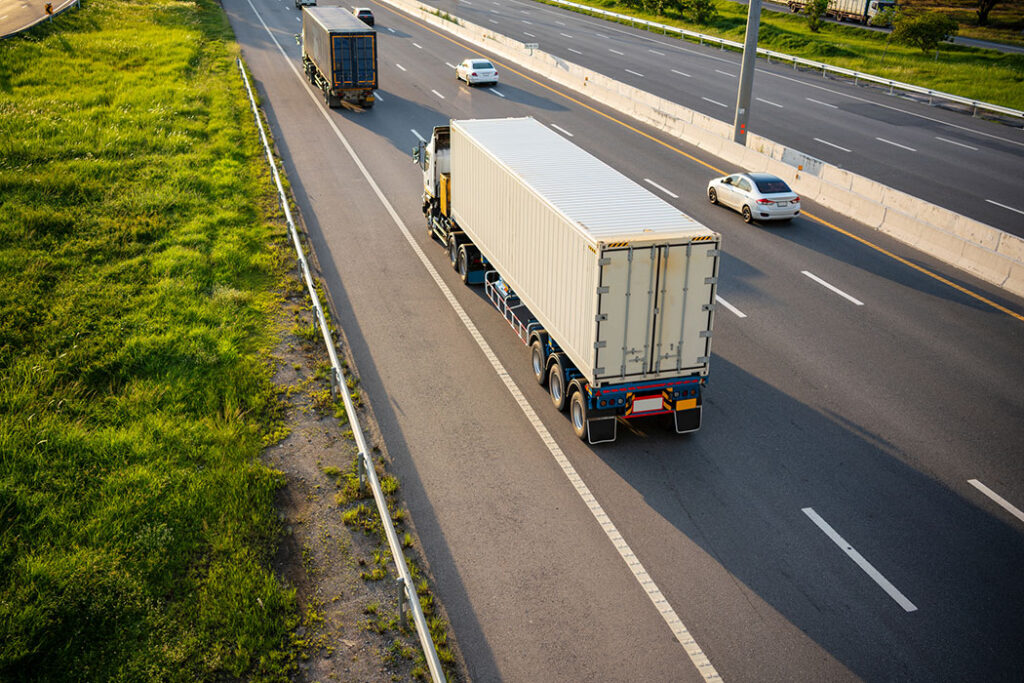
Detroit is a major commercial border crossing between the United States and Canada, and heavy truck traffic moves through the city on I-94, I-75, I-96, and the Lodge Freeway. Crashes in these corridors often involve long-haul carriers based outside Michigan.
Crashes Involving Out-of-State and Canadian Carriers
Trucks crossing the Ambassador Bridge or traveling to and from the region’s distribution centers may be operated by carriers headquartered in other states or in Canada.
These cases can raise questions about where to file suit, which insurer handles the claim, and how to obtain records from a distant carrier.
Construction Zones and Merging Traffic
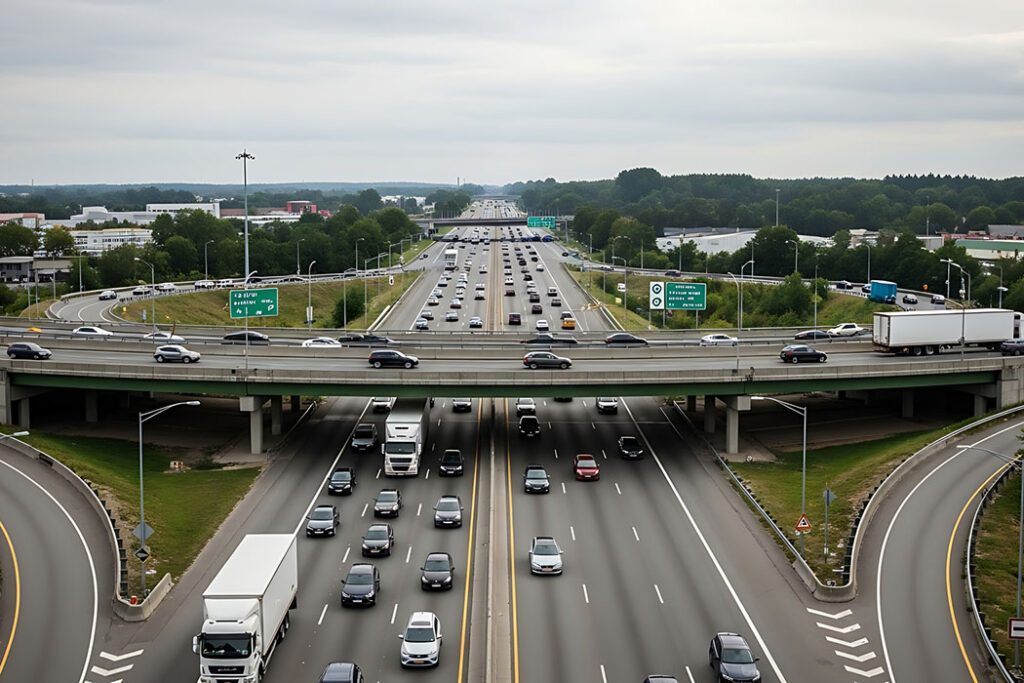
Freeway work zones and tight interchanges create conditions where truck drivers must slow down and allow extra space. When a truck cannot stop in time or swings into an occupied lane, the driver’s speed, following distance, and attention become central questions.
Why Is Acting Quickly So Important After a Truck Crash?
Trucking companies and their insurers often send investigators to a serious crash within hours. Their goal is to document the scene and the evidence from the carrier’s point of view, which is why injured people benefit from moving quickly to preserve their own evidence.
Key evidence that can be lost without prompt action includes:
- Electronic control module and ELD data, which can show speed, braking, and driving hours before the crash
- Driver logs and dispatch records, some of which carriers are only required to keep for six months
- Dash camera and in-cab video, which may be overwritten on a routine schedule
- The truck and trailer themselves, which may be repaired or returned to service
- Driver qualification records, drug and alcohol testing records, and records of prior violations
A preservation letter sent to the carrier early puts it on notice that this evidence must be kept. Destroying evidence after receiving that notice can lead to serious consequences for the carrier in court.
What Losses Can a Detroit Truck Accident Claim Cover?
A Detroit truck accident claim can cover both the no-fault benefits paid by your own insurer and the damages owed by the parties responsible for the crash.
Because truck crashes can cause serious injuries, claims against the carrier and other responsible parties may account for a large share of the long-term recovery.
No-Fault Benefits
PIP benefits can pay medical expenses up to the applicable policy limit, a portion of lost wages for up to three years, household replacement services, and medical mileage. These benefits are paid regardless of fault, but they stop at the coverage level chosen on the policy.
Damages From the Trucking Company and Driver
Once the tort threshold is met, the responsible parties can be held accountable for pain and suffering, loss of enjoyment of life, and emotional distress.
The claim can also recover economic losses beyond what PIP pays, including medical costs above the PIP limit, wage loss beyond three years, and reduced future earning capacity.
Planning for Long-Term Needs
Serious truck crash injuries such as spinal cord damage, brain injuries, and amputations can require care for years. Documenting future medical needs, home modifications, and lost earning ability before resolving a claim helps make sure the recovery reflects the injury’s full effect.
How Long Do You Have to File a Truck Accident Claim in Michigan?
Most Michigan truck accident injury lawsuits must be filed within three years of the crash under MCL 600.5805. No-fault PIP claims require written notice to the insurer within one year under MCL 500.3145, and claims involving a government-owned vehicle can have shorter notice deadlines.
How Shared Fault Affects a Truck Claim
Michigan reduces damages by the injured person’s share of fault, and a person found more than 50% at fault cannot recover noneconomic damages such as pain and suffering.
Trucking companies frequently argue the other driver cut off the truck or stopped suddenly, so evidence from the truck itself is often the most reliable response.
FAQs for a Detroit Truck Accident Lawyer
Can I sue the trucking company if the driver was an independent contractor?
A Michigan truck crash claim can often reach the motor carrier even when the driver is labeled an independent contractor.
Federal rules treat the carrier operating under its own authority as responsible for the truck’s operation, and Michigan’s owner liability statute can also apply to the vehicle’s owner.
What if a delivery van, not a semi-truck, hit me in Detroit?
A crash with a delivery van or box truck in Detroit can be handled much like a semi-truck case, especially when the vehicle is operated for a business.
The company that employs the driver or contracts the delivery route may share responsibility, and commercial auto policies often carry higher limits than personal policies.
How do I find out if a trucking company has a bad safety record?
The FMCSA publishes carrier safety information, including inspection results and crash history, through its Safety Measurement System. A carrier’s prior violations may help show a pattern of unsafe practices, although a poor record does not by itself prove the carrier caused a particular crash.
Do truck accident cases take longer than car accident cases in Michigan?
Truck accident cases in Michigan often take longer than car accident claims because they involve more parties, more records, and more insurers. Specialist analysis of ELD data, braking, and accident reconstruction also adds time, particularly when injuries are severe.
Can a family file a claim if a truck crash in Detroit was fatal?
When a truck crash in Michigan causes a death, the personal representative of the person’s estate can bring a wrongful death claim on behalf of the family. That claim can include funeral expenses, the loss of financial support, and the loss of the person’s companionship.
Protect Your Truck Accident Claim After a Detroit Crash
Recovering from a truck crash often takes months, and the trucking company’s claims process will keep moving whether you are ready or not. Having your own team gathering evidence and tracking deadlines can take a significant weight off your shoulders.
Goodman Acker represents people injured in truck crashes throughout Detroit and Wayne County. Contact our team to talk through what happened and how we can help.
Goodman Acker P.C.
Serving Detroit from Our Southfield Headquarters
Two Towne Square, Suite 444 Southfield, MI 48076
Phone: 248-861-8100

LEGALLY REVIEWED BY BARRY J. GOODMAN
Barry J. Goodman has devoted his professional life to keeping courthouse doors open for victims seeking justice. Always a tireless advocate for his own clients, Goodman sees his responsibility as a Detroit personal injury attorney in a broader sense as well. [ Attorney Bio ]


GOODMAN ACKER
Meet our Personal Injury Attorneys