

- January 20, 2026
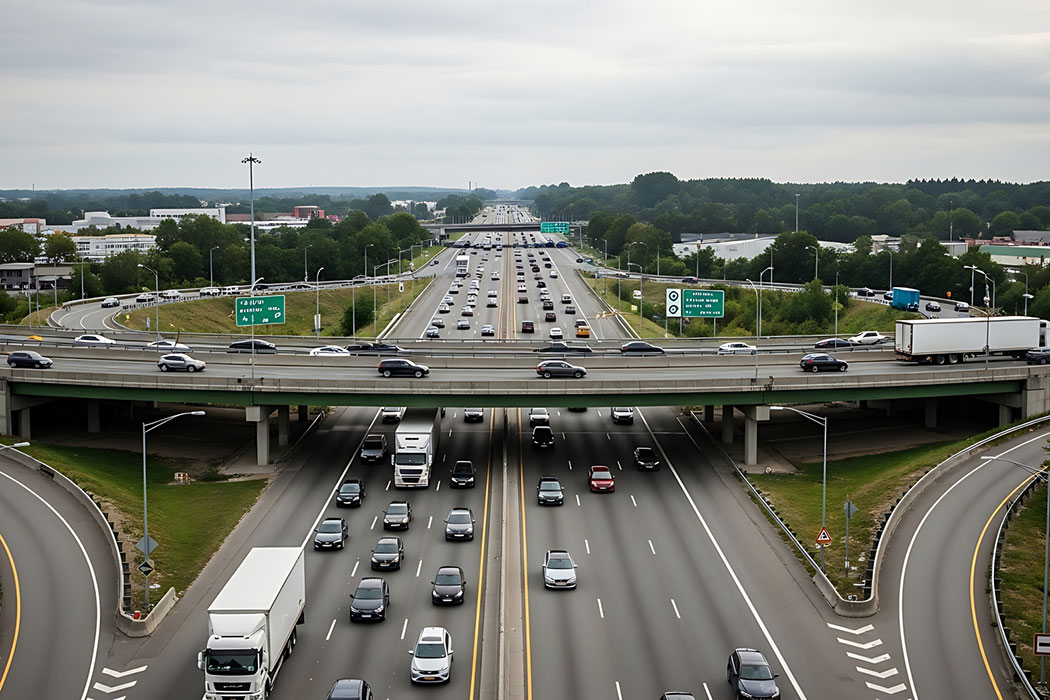
The stretch of I-75 that cuts through Downriver Detroit is more than just a highway; it is the main artery of a vast industrial heartland. Every day, a relentless river of steel flows past the Rouge Complex, feeding the logistics hubs in Taylor and Huron Township and carrying freight to and from the Ambassador Bridge.
For commuters, sharing the road with this convoy of semi-trucks is a non-negotiable part of daily life. Lately, however, the rhythm of that traffic feels different.
It feels more crowded, more aggressive, and more dangerous. The news seems to feature another jackknifed trailer or a multi-vehicle pileup on I-75 with increasing frequency.
A near-miss with a merging tractor-trailer that used to be a rare, heart-pounding event now feels like a weekly occurrence. It is easy to feel like you are just a small vehicle trying to survive in a lane dominated by giants.
This feeling is not just your imagination. The rise in serious truck collisions is not a random spike but the predictable result of intense economic pressures, a strained infrastructure, and critical human factors.
Examining why truck accidents are increasing around Detroit’s I-75 industrial corridor reveals a series of systemic issues that prioritize speed and profit over the safety of everyone on the road.
The pressures on Detroit's main artery
- An e-commerce boom and just-in-time manufacturing have dramatically increased the volume of truck traffic on I-75, leading to greater congestion and risk.
- A national driver shortage has led some trucking companies to hire less experienced drivers and may pressure existing drivers to violate federal safety rules.
- Detroit's aging infrastructure, including constant construction and bottleneck interchanges, forces massive trucks and smaller passenger cars into dangerously close quarters.
- Negligence often extends beyond the driver to the trucking company itself, which may be liable for inadequate training, poor maintenance, or pressuring drivers to meet unsafe deadlines.
The Economic Boom and Its Unseen Consequences on the Road
The increase in truck traffic is a direct reflection of economic activity. As commerce grows, so does the demand to move goods. This demand has placed an unprecedented strain on the I-75 corridor.
The demands of just-in-time delivery
Michigan's automotive and manufacturing sectors rely heavily on a "just-in-time" delivery model. This means parts and materials are delivered to factories right before they are needed, minimizing storage costs.
While efficient for manufacturing, this model puts immense pressure on trucking companies and their drivers to meet rigid, unforgiving deadlines. A single delay, perhaps from a minor traffic jam or a weather slowdown, can have a massive ripple effect, threatening to shut down an entire assembly line.
This creates a powerful incentive for drivers and dispatchers to push the limits of safety, whether by speeding, reducing following distance, or driving longer than is legally allowed. The pressure to make up for lost time is a constant factor in this logistics chain.
E-commerce hubs near I-75
The explosion of e-commerce has led to the construction of massive fulfillment and distribution centers, many of which are strategically located just off I-75 in communities like Taylor and Romulus.
These facilities generate a constant, 24/7 flow of truck traffic as goods are brought in and sent out for delivery. This type of traffic is different from long-haul trucking. It involves thousands of short-haul trips, with trucks constantly entering and exiting the highway.
This creates more merge points and more interactions between commercial trucks and passenger cars, significantly increasing the opportunities for collisions in an already congested environment.
The Ambassador Bridge and Port of Detroit
I-75 is the primary feeder route for the Ambassador Bridge, the busiest international trade crossing in North America. Any disruption or increase in trade volume has an immediate and direct impact on the number of trucks on this highway.
This constant flow of international freight, combined with local and national shipping, creates a level of traffic density that leaves very little room for driver error.
It also introduces trucks and drivers from different jurisdictions who may be less familiar with the specific hazards of the Detroit area's road network, adding another layer of unpredictability.
A Closer Look at the Human Element: The Driver
While economic forces create the conditions for danger, the actions of the person behind the wheel are often the immediate cause of a crash. Today's truck drivers are facing a unique set of pressures that can lead to tragic mistakes.
The national driver shortage and its local impact
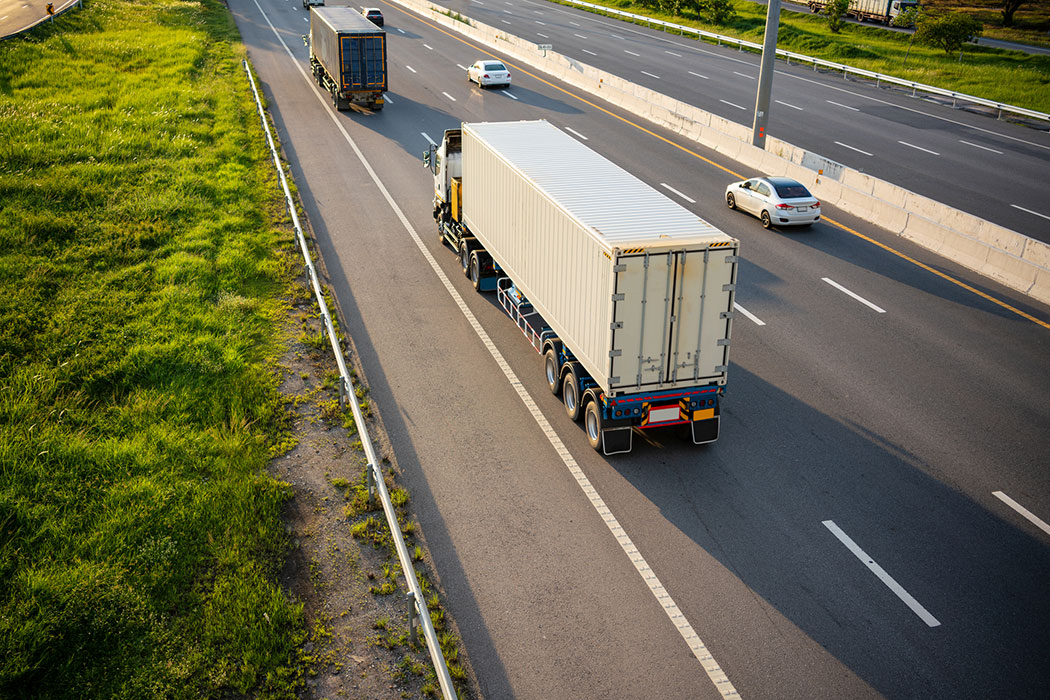
The trucking industry has been facing a severe shortage of qualified drivers for years. This shortage has two main consequences for safety on Detroit’s highways. First, some trucking companies may lower their hiring standards.
This can mean overlooking past moving violations or hiring drivers with minimal experience in operating a fully loaded tractor-trailer in dense, urban traffic.
Second, the shortage places more demand on the existing pool of drivers.
This leads to longer hours, more routes per week, and increased pressure to take on demanding jobs. This cumulative fatigue is a major safety concern. A driver who is overworked is more likely to make a critical error in judgment.
Violations of federal hours-of-service rules
To combat driver fatigue, the Federal Motor Carrier Safety Administration (FMCSA) sets strict limits on how long commercial drivers can be on the road. These Hours-of-Service (HOS) rules dictate drive time and mandatory rest breaks.
When a driver falsifies their logbooks or is pressured by their company to drive beyond these legal limits, their reaction time and judgment suffer dramatically.
A fatigued driver experiences slower reaction times, reduced vigilance, and impaired decision-making skills, similar to an intoxicated driver.
Proving an HOS violation often involves a detailed analysis of electronic logging devices (ELDs), fuel receipts, and dispatch records to create a true timeline of the driver's activities.
Detroit’s Aging Infrastructure and Constant Congestion
The design of I-75 itself is a major contributor to the increase in accidents. The highway was not built to handle its current volume of commercial traffic, and the constant attempts to upgrade it create their own set of hazards.
Perpetual road construction
Long-term construction projects, like the modernization of I-75, create a constantly shifting series of lane closures, narrow lanes, and sudden traffic pattern changes. These work zones force 80,000-pound trucks and 3,000-pound cars into tight, unforgiving spaces with little to no shoulder.
These zones are especially dangerous at night or in poor weather if the construction company has failed to provide adequate lighting and clear signage. Sudden braking, confusing lane shifts, and uneven pavement in these zones frequently lead to serious collisions.
In some cases, the construction company itself may share liability for creating a hazardous condition.
The I-75 and I-94 Interchange
The interchange connecting two of Michigan’s busiest highways is a notorious bottleneck. The confluence of local commuters, long-haul truckers, and travelers heading to Detroit Metro Airport creates a chaotic environment with short merge lanes and a high volume of lane changes.
Drivers must process a massive amount of visual information while trying to position their vehicles. A trucker's large blind spots can easily hide a passenger car during a lane change, and the pressure to merge can lead to aggressive and unsafe maneuvers.
Squeezing through the Downriver Bottleneck
The stretch of I-75 through the Downriver communities south of Detroit is one of the most heavily traveled industrial corridors in the nation. The high volume of trucks entering and exiting from factories and logistics centers at ramps like Eureka Road and Northline Road means that any stalled vehicle or minor accident can cause immediate and massive traffic jams.
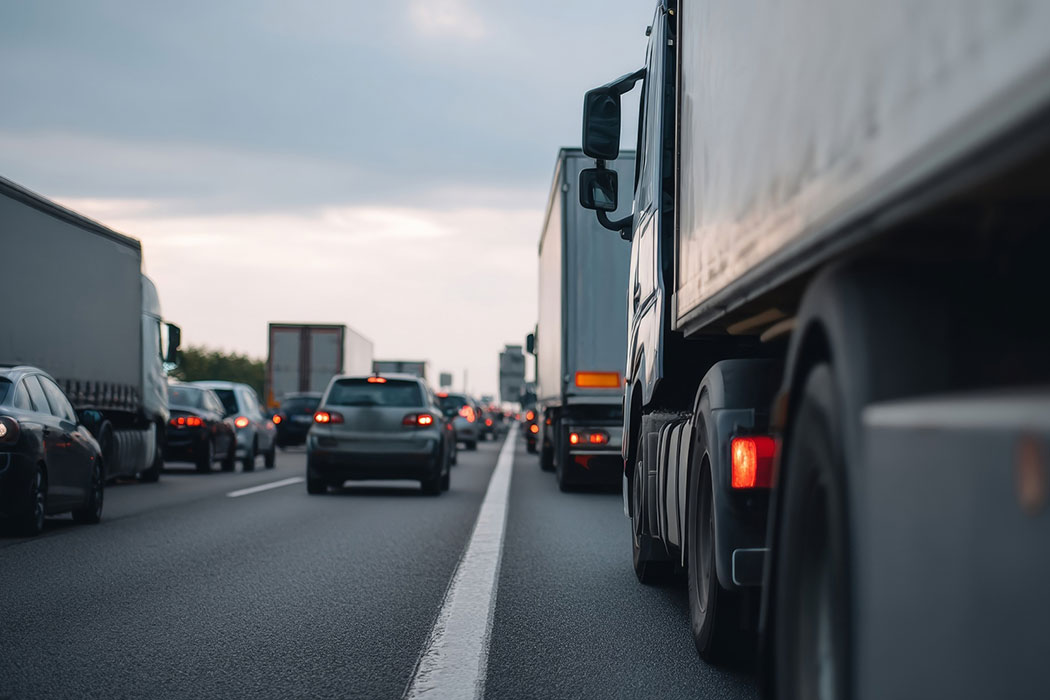
This stop-and-go traffic increases the likelihood of rear-end collisions and sideswipe accidents as drivers jockey for position.
Corporate Negligence
Often, the driver is not the only one at fault. The trucking company (motor carrier) may have created the conditions that led to the crash through a pattern of corporate negligence. Under a legal principle called vicarious liability, an employer is generally responsible for the negligent acts of its employees.
Inadequate training and supervision
Motor carriers have a legal duty to properly hire, train, and supervise their drivers. This includes conducting thorough background checks to screen out drivers with a history of unsafe driving.
It also means providing specific training on defensive driving in dense urban environments like Detroit and on handling a vehicle in adverse weather conditions.
A company that puts an improperly trained driver on the road can be held liable for the harm that driver causes.
An investigation may seek to review the company’s training manuals and driver qualification files to expose these failures.
Cutting corners on vehicle maintenance
A commercial truck is a complex piece of machinery that requires constant maintenance to operate safely. Brakes, tires, steering components, and lights must be inspected regularly as required by federal law.
Some companies, in an effort to maximize profits, may cut corners on these critical maintenance schedules or use substandard replacement parts. A crash caused by brake failure or a tire blowout may not be the driver's fault but the direct result of the company's failure to maintain its fleet.
We hire professionals to inspect the wreckage and review maintenance logs to identify evidence of systemic neglect.
Pressuring drivers to prioritize speed over safety
The most common form of corporate negligence is creating a culture that prioritizes speed over safety. This can happen in several ways. Dispatchers may pressure drivers to violate HOS rules to meet a deadline.
A company's pay structure, such as paying by the mile, can incentivize drivers to speed and take fewer rest breaks. An investigation into company records, internal emails, and communication between drivers and dispatchers can often reveal a pattern of this systemic negligence. Proving that the company encouraged or ignored unsafe practices is a key part of holding them fully accountable.
FAQ for Detroit Truck Accidents
What makes a truck accident case different from a car accident case?
Truck accident cases involve a different set of laws, including federal regulations. They also frequently involve multiple liable parties, such as the driver, the trucking company, a maintenance provider, and a cargo loader. The investigation is far more complex and requires swift action to preserve evidence like the truck's black box data and driver logs.
Who is responsible if a truck's cargo causes an accident?
If improperly loaded or unsecured cargo shifts or falls from the truck and causes an accident, the company that loaded the cargo may be held liable in addition to the driver and the motor carrier. This requires a detailed investigation into the shipping and loading procedures to determine who breached their duty of care.
How long do I have to file a truck accident lawsuit in Michigan?
The statute of limitations for filing a personal injury lawsuit in Michigan is generally three years from the date of the accident. This deadline is set by the Michigan Legislature and is very strict. If you miss it, you will likely lose your right to pursue compensation forever.
Beyond the Wreckage: Finding a Path Forward

When you are injured in a truck accident, you are not just a statistic in a news report about a traffic jam on I-75. You are a person whose life has been forcefully disrupted by a system that often fails to prioritize your safety. Holding the responsible parties accountable is about securing your own financial future and sending a message that safety cannot be sacrificed for speed.
The team at Goodman Acker PC is dedicated to being a voice for those who have been harmed by the negligence of others. We have the resources and the knowledge to investigate these complex cases and stand up to powerful trucking and insurance companies.