

- January 23, 2026
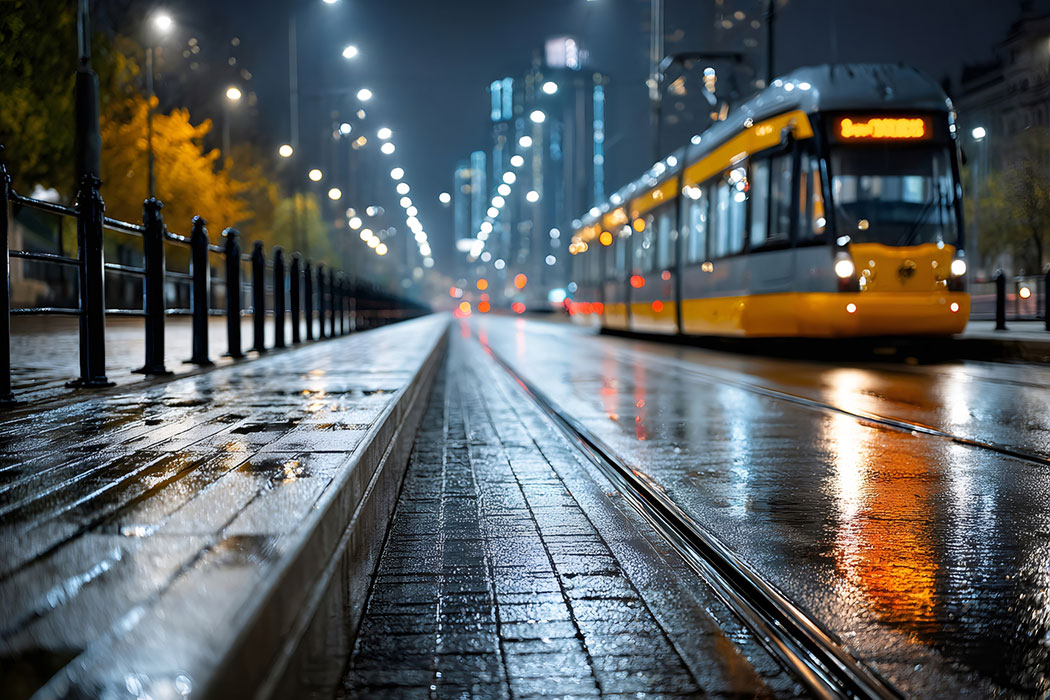
The sight of the QLine gliding down the center of Woodward Avenue is a symbol of modern Detroit. It moves in a predictable, steady line, a sleek contrast to the bustling traffic on either side.
Overhead, the People Mover whispers along its elevated track, offering a bird’s-eye view of the city’s comeback. These transit systems are woven into the fabric of downtown, a part of the daily commute and the landscape of the city.
This familiarity can make an accident with one of these systems uniquely shocking. A collision with the QLine is not a standard car crash; it involves a multi-ton railcar fixed to its path. An incident near a People Mover station involves infrastructure and entities that are not part of a typical roadway.
The scene is total confusion as drivers and pedestrians try to make sense of a situation that does not fit the usual rules of the road. This confusion extends directly to the legal process that follows.
The laws that govern an accident with a city bus are different from the ones that apply to a fixed-rail streetcar. The deadlines for filing a claim can be alarmingly short, and the entities you must file against are not always obvious.
If you were hurt on Woodward in a QLine or People Mover route accident, you need to know that a special set of rules will shape your path to recovery.
The rules of the rail:
Michigan’s No-Fault insurance laws apply differently to accidents involving the QLine because a streetcar is not considered a motor vehicle under the statute.
- If a public entity like the City of Detroit or a transportation authority is involved, you may be subject to a strict 120-day notice requirement to preserve your right to file a claim.
- The fixed routes of these systems create predictable, high-risk zones where drivers must exercise extra caution, especially at intersections and near stations.
- Immediately after an incident, documenting specific details like the rail car number, the station name, and the precise location is essential for a future investigation.
What Makes These Transit Systems Create Unique Dangers?
The QLine and People Mover are designed to integrate with city traffic, but their fundamental nature creates specific hazards that do not exist in standard vehicle-to-vehicle interactions.
The qline's street-level hazards on Woodward Avenue
The QLine runs on a fixed rail track, primarily in the center lanes of Woodward Avenue. This design cannot deviate from its path, which places the full responsibility for avoidance on the drivers, cyclists, and pedestrians around it.
Common risk factors include:
- Left-turn collisions: Drivers on Woodward attempting to make a left turn must cross the QLine tracks. Misjudging the streetcar's speed or failing to see it approaching can lead to a devastating T-bone style collision.
- Sudden stops at stations: The QLine makes frequent stops at stations located in the median. Drivers who are following too closely or are distracted may not be prepared for the streetcar to brake suddenly, leading to rear-end collisions.
- Getting trapped on the tracks: In heavy, stop-and-go traffic, a car can become inadvertently stopped on the QLine tracks. If the streetcar approaches, the driver may have nowhere to go, creating a high-risk situation.
The People Mover's effect on downtown traffic flow
While the People Mover runs on an elevated track, its infrastructure and operation still affect the streets below. The massive concrete support pillars can create significant blind spots for drivers, especially at intersections.
Accidents can occur when a driver making a turn does not see another car or pedestrian hidden by a pillar. Furthermore, the designated stations for the People Mover, like the one at the Renaissance Center, create zones of high pedestrian and vehicle congestion as people enter and exit the system.
What Are My Immediate Steps After an Accident with the QLine or People Mover?
The actions you take in the first hours and days after an accident are vital. You are not just documenting a crash; you are preserving your legal rights.
Your next steps should include:
- Ensure safety and report the accident to Detroit police: Your first priority is to move to a safe location if you are able. Always call 911 to report the accident. A Detroit Police Department report creates an official, neutral record of the incident, which is the foundational document for any future claim.
- Document every detail of the scene: The transit authority will begin its own investigation immediately. You must do the same. Use your phone to take pictures of everything: the position of the vehicles, the damage, the streetcar's number, the station name, any visible obstructions, and the weather conditions.
- Seek a full medical evaluation: Even if you feel you are only shaken up, you must see a doctor. The adrenaline from a crash can mask serious injuries, like soft-tissue damage or concussions, that may not show symptoms for days. Seeking prompt medical care connects your injuries directly to the accident.
- Preserve your own records from the start: Do not speak with any investigators or insurance adjusters for the transit authority before consulting an attorney. Keep all your paperwork, including medical reports and receipts for any expenses, in a dedicated file.
How Does Michigan's No-Fault Law Work in These Cases?
The involvement of a fixed-rail system like the QLine introduces a major exception to Michigan's standard No-Fault rules.
The general rule: Your PIP coverage is primary
In a typical accident between two cars, your own auto insurance policy pays for your initial medical bills and lost wages through your Personal Injury Protection (PIP) coverage. This is the core of the No-Fault system.
The fixed-rail exception for the QLine
The Michigan No-Fault Act, specifically MCL 500.3101, defines a "motor vehicle" as a vehicle with more than two wheels that is operated on a public highway. Crucially, the law states that a vehicle operated on rails is not considered a motor vehicle for the purposes of the act.
This means if you are a pedestrian or cyclist hit by the QLine, you may not be able to make a standard PIP claim. If you are in a car that collides with the QLine, the rules for how your PIP benefits are paid can also change.
The legal analysis is complex and depends on the specific facts of the incident. This is one of the most significant legal distinctions in these cases.
Why is the 120-Day Rule So Important for My Claim?
When your accident involves a public or governmental entity, you are subject to a set of laws that provide those entities with special protections, known as governmental immunity.
Governmental immunity
Governmental immunity is a legal doctrine that shields government agencies from many types of lawsuits. The idea is to protect taxpayer funds from constant litigation.
However, there are specific exceptions to this immunity, such as for injuries caused by the negligent operation of government-owned vehicles or by a defect in a public building.
The strict 120-day notice requirement
To pursue a claim under one of these exceptions, you must first provide the correct government agency with a formal, written notice of your injury and your intent to file a claim. Under MCL 691.1404, this notice must be served within 120 days of the date of the injury.
This is not a suggestion; it is an absolute and unforgiving deadline. The notice must contain specific details about the location, the nature of the defect or negligence, your injuries, and any known witnesses.
A failure to file this formal notice correctly and on time will permanently bar you from filing a lawsuit, no matter how serious your injuries are.
Identifying the correct governmental entity
This process is further complicated by the need to identify the correct entity. Is the claim against M-1 RAIL, the private-public operator of the QLine? Is it against the Detroit Transportation Corporation, which runs the People Mover? Or is it against the City of Detroit itself for a problem with the road or a traffic signal?
Serving the notice to the wrong entity can also invalidate your claim.
FAQ for Detroit Transit Accidents
Can I sue the QLine or People Mover operator for my injuries?
Yes, but the process is different from suing a regular driver. You must overcome the hurdles of governmental immunity by filing the proper notice on time. You also have to prove that the operator was negligent, meaning they failed to operate the system with reasonable care, and that their negligence directly caused your injuries.
What if I was a passenger on the QLine or People Mover when I was hurt?
As a passenger, the transit operator owes you a higher duty of care, known as the common carrier doctrine. If you were injured because the operator braked too suddenly, collided with another object, or because of a defect inside the vehicle, you may have a strong claim for your injuries. The same complex notice rules and No-Fault exceptions may still apply.
Who is responsible if a support pillar for the People Mover was involved in a crash?
If an accident was caused by the placement or condition of a People Mover support pillar, such as poor lighting or a lack of reflective markings, a claim might be filed against the entity responsible for its maintenance. This would likely fall under a "defective highway" exception to governmental immunity, which also has its own strict notice requirements.
From Public Transit to a Personal Path Forward
An accident involving the QLine or the People Mover is not just another traffic collision. It is a complex legal event governed by a unique intersection of No-Fault law, personal injury law, and governmental immunity statutes.
The short deadlines and confusing rules can leave an injured person feeling lost, unsure of how to protect their rights while trying to recover from their injuries.
At Goodman Acker PC, our attorneys possess in-depth knowledge of the specific laws applicable to accidents on Woodward Avenue and throughout Downtown Detroit.