

- January 21, 2026
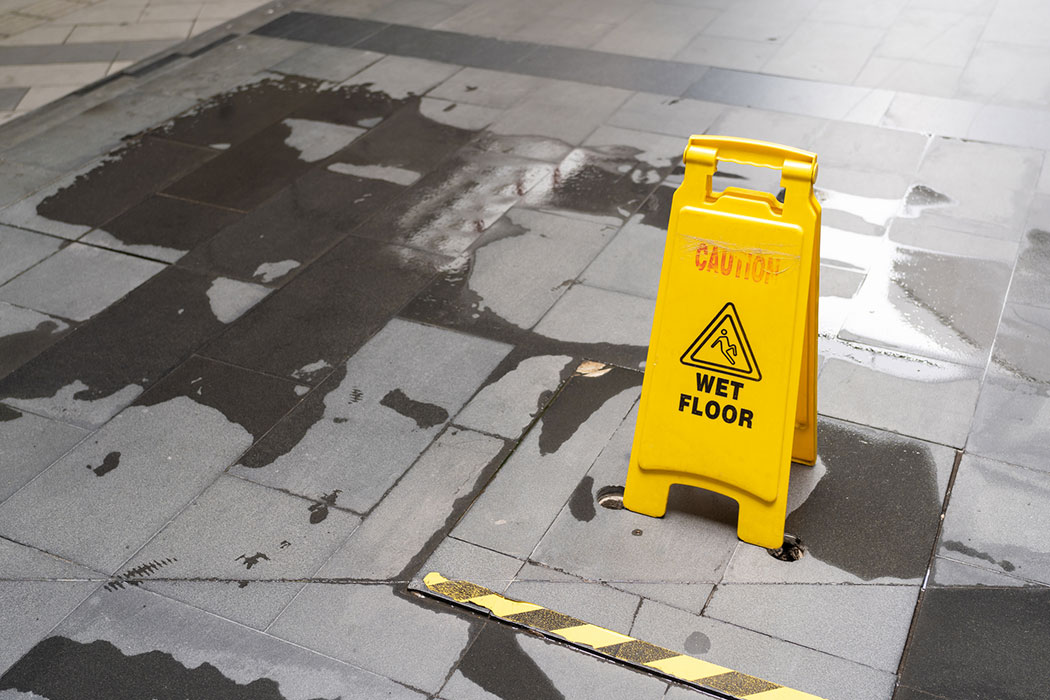
The weekend trip to a big box store like Meijer or Costco is a familiar Michigan ritual. You move through the wide, brightly lit aisles, navigating oversized shopping carts past towering shelves of products.
The sheer scale of the store and the constant motion of fellow shoppers and employees become part of the background noise. You are focused on your shopping list, trusting that the concrete floor beneath your feet is safe and clear.
That trust is broken in a single, painful instant.
A puddle of clear liquid from a leaking freezer, a handful of dropped grapes in the produce section, or a poorly placed pallet creates a hazard you do not see until it is too late. The sudden loss of footing, the impact with the hard floor, and the immediate wave of pain and embarrassment are a shocking disruption to a routine day.
In the moments that follow, a store manager may file an incident report, and you may try to downplay your injuries, hoping the pain will subside. But when it does not, you are left with mounting medical bills and the frustrating knowledge that your injury was preventable.
For years, the legal path for victims was often blocked by a harsh legal doctrine. Now, a landmark court ruling has changed everything, and knowing how Michigan laws change your slip and fall case is the first step toward holding a negligent store accountable.
The new rules for store injury claims
- A 2023 Michigan Supreme Court ruling fundamentally changed how slip and fall cases are handled, making it fairer for injured victims to have their day in court.
- The open and obvious nature of a hazard no longer automatically allows a judge to dismiss a case; it is now a factor for a jury to consider when determining fault.
- Proving the store knew or should have known about the dangerous condition, a concept known as "notice," remains the foundation of a successful claim.
- Evidence like store security footage and employee cleaning logs are more important than ever in establishing how long a hazard existed before an injury occurred.
What is a Slip and Fall Case in Michigan?
A slip and fall case is a type of personal injury claim that falls under a broader legal area called premises liability. Premises liability law holds property owners and occupiers, like Meijer or Costco, responsible for injuries that happen on their property due to an unsafe condition.
The law requires them to maintain their property in a reasonably safe condition for their customers.
The store's high duty of care to you as a customer
In Michigan, the level of responsibility a property owner has depends on the visitor's legal status. As a customer, you are considered an invitee. This means you were invited onto the property for a commercial purpose that benefits the owner.
As an invitee, the store owes you the highest duty of care. This duty requires the store to:
- Maintain the premises in a reasonably safe condition.
- Inspect the property to discover any new or unknown dangers.
- Repair or remove any known hazards.
- Warn you of any dangers that cannot be immediately removed.
This is an active responsibility. A store cannot simply wait for someone to report a problem; they must be proactive in looking for them.
Common Hazards in Big Box Stores like Meijer and Costco
The size and high traffic of these stores create a constant potential for dangerous conditions to develop. Many slip and fall injuries are caused by hazards that could have been easily prevented with proper care.
Common examples include:
- Spilled liquids in grocery aisles from dropped or leaking products.
- Water or condensation on the floor near refrigerator and freezer cases.
- Fallen produce, like grapes or berries, in the fresh food sections.
- Cluttered aisles or merchandise that has fallen into walkways.
- Rainwater, snow, or ice tracked into the entrance and exit areas.
A store's failure to promptly and properly address any of these issues can be considered a breach of its duty of care.
How Did the 2023 Michigan Supreme Court Ruling Change Everything?
For over twenty years, a legal doctrine known as open and obvious made it extremely difficult for injured people in Michigan to win a slip and fall case. In 2023, the Michigan Supreme Court's decision in Kandil-Elsayed v. F & E Oil, Inc. changed this landscape entirely.
The Old Rule: The Open and Obvious Defense Under Lugo
Under the old standard, established in a case called Lugo v. Ameritech Corp., a property owner had no duty to protect a person from a danger that was open and obvious.
This meant that if a hazard was visible enough that an average person could be expected to see it upon casual inspection, the property owner was not liable, and a judge would typically dismiss the case.
In practice, this was a nearly insurmountable hurdle for victims. Defense attorneys would argue that almost any hazard, from a puddle of water to a patch of ice, was open and obvious. Judges frequently agreed and dismissed cases before they ever reached a jury, leaving seriously injured people with no recourse.
The New Standard: Overruling Lugo
The Michigan Supreme Court recognized that the Lugo standard was unfair and did not align with traditional premises liability law. The new ruling clarifies that a property owner's duty to keep their premises reasonably safe always exists. The fact that a hazard might be visible does not erase that fundamental duty.
From a question of duty to a question of breach
This is the most important legal change. Under the old rule, open and obvious was a question of duty. A judge would ask, Did the store have a duty to protect this customer from a puddle they should have seen? The answer was often No, and the case would be dismissed.
Under the new rule, open and obvious is now part of the analysis of breach and comparative fault. The question a jury now gets to answer is, Did the store breach its duty of reasonable care by failing to clean up the puddle in a timely manner? The visibility of the puddle is just one factor the jury will consider when weighing everyone's responsibility.
How a jury now considers comparative fault
The new standard allows a jury to compare the negligence of the store with the actions of the injured shopper. Michigan follows a modified comparative fault rule. A jury might find that the store was 90% at fault for allowing a dangerous condition to exist for an hour, but that the shopper was 10% at fault for not paying closer attention.
In this scenario, the shopper can still recover compensation, but their final award would be reduced by their 10% share of fault. This is a much fairer system that allows a jury of peers, not a single judge, to decide what is reasonable.
How Do We Prove the Store Was Negligent?
Even with the new law, you still must prove that the store was negligent. The foundation of this proof is establishing that the store had "notice" of the dangerous condition.
Proving actual notice
A store has actual notice when one of its employees knew about the specific hazard before the fall occurred. This is the most direct way to prove negligence.
Actual notice can be established if:
- An employee caused the spill or created the hazard.
- Another customer reported the hazard to an employee before you fell.
- An employee saw the hazard but failed to take any action to clean it up or place a warning sign.
Proving constructive notice
In many cases, it is not possible to prove that an employee had actual knowledge. This is where the concept of constructive notice comes in. Constructive notice means the dangerous condition existed for a long enough period of time that the store should have known about it through the exercise of reasonable care.
To prove constructive notice, we look for evidence about the nature of the hazard. For example, a puddle of clear, clean water might have just been spilled. However, if the puddle has dirt smudges and cart tracks running through it, that is strong evidence it has been there for a significant amount of time.
A pile of fully melted ice cream is another classic example of a hazard that has existed long enough that an employee on a routine inspection should have discovered and cleaned it.
What Evidence is Used to Build Your Case?
To prove notice and negligence, we seek out specific types of evidence that are often in the store's possession.
Store security footage
Nearly all large retail stores like Meijer and Costco have extensive video surveillance systems. This footage can be the single most important piece of evidence in a slip and fall case.
Video can establish:
- Exactly how the hazard was created.
- Precisely how long the hazard existed on the floor before you fell.
- Whether any employees walked past the hazard without addressing it.
- The mechanics of your fall, countering any defense argument that you fell for another reason.
It is vital to act quickly to preserve this evidence. An attorney will immediately send the store a formal spoliation letter, which is a legal demand that they preserve all relevant video footage and not destroy it as part of a routine recycling process.
FAQ for Michigan Slip and Fall Cases
What if the store cleaned up the spill right after I fell?
This is normal procedure for a store, but it does not hurt your case. In fact, the act of cleaning it up can be seen as an acknowledgment that a hazard existed. This is why taking photos of the scene immediately, if you are able, is so beneficial.
The manager apologized at the scene. Is that an admission of guilt?
While an apology may seem like an admission of fault, Michigan law prevents most apologies from being used as evidence of liability in court. The apology itself may not be admissible, but the other factual statements a manager makes during that conversation could be.
How long do I have to file a slip and fall lawsuit in Michigan?
The statute of limitations for filing a personal injury lawsuit, including a premises liability claim, is generally three years from the date of the injury. This is a strict deadline set by the Michigan Legislature. If you miss it, you will lose your right to pursue compensation.
What if I was looking at my phone when I fell?
This is a question of comparative fault. The defense will likely argue that you were partially at fault for not paying attention. Under the new law, this no longer bars your claim. A jury will hear the evidence and decide what percentage of fault, if any, to assign to you. Your recovery would then be reduced by that percentage.
From the Aisle to Your Advocate

The recent changes in Michigan law have reopened the courthouse doors for people who were unfairly denied justice in the past. A fall caused by a store’s carelessness is no longer a case that can be easily dismissed.
You now have a fairer opportunity to present your case to a jury of your peers and hold a negligent corporation accountable.
At Goodman Acker PC, our attorneys have a deep knowledge of Michigan's evolving premises liability laws. We know how to investigate these cases, how to preserve critical evidence, and how to build a claim that is designed to stand up to the arguments of large retail chains.