
Millions Recovered for Our Clients
Our Record of Success
Michigan riders face a problem that motorcyclists in most other states do not. Standard motorcycle insurance policies in Michigan do not include Personal Injury Protection (PIP), which means your motorcycle policy alone may not cover your medical bills after a crash.
That insurance gap makes a motorcycle accident attorney in Detroit critical for identifying every available source of benefits and building the third-party claim against the driver who hit you.
Goodman Acker represents injured motorcycle riders across Detroit, Wayne County, and the greater Metro Detroit area, including Southfield, Sterling Heights, and surrounding communities.
We handle motorcycle crash claims on a contingency fee basis from our Southfield headquarters, and we have recovered seven-figure results in Michigan motorcycle cases. Call 248-861-8100 to discuss your motorcycle accident and find out what coverage applies to your injuries.
How Goodman Acker Fights Rider Bias in Wayne County Courts

Insurance companies approach motorcycle claims differently than car accident claims. Adjusters know that some jurors view riders as risk-takers, and they use that perception to argue the motorcyclist caused or contributed to the collision.
We have seen this tactic in Wayne County cases where the police report clearly identified the other driver as the at-fault party.
Motorcycle Verdicts and Settlements in Michigan
Our attorneys recovered a $1.9 million motorcycle accident settlement in Wayne County and a $525,000 recovery in a separate Macomb County motorcycle crash.
Although past results do not guarantee future outcomes, both cases involved insurers who initially tried to assign partial blame to the rider. The physical evidence and witness testimony told a different story.
How We Counter the Bias Problem
We build every motorcycle case around the other driver’s conduct, not around the rider’s choice of transportation.
Dashcam footage, intersection camera recordings, cell phone records from the at-fault driver, and accident reconstruction analysis all help establish that the other driver caused the crash. When the evidence speaks clearly, the rider-bias argument loses its power.
We take motorcycle accident cases on a contingency fee basis. You pay nothing up front, and we collect no attorney fees unless we recover compensation. Call 248-861-8100 to get your claim reviewed.
Michigan’s No-Fault Insurance Gap and What It Means for Detroit Riders
Motorcyclists in Michigan are not required to carry PIP coverage under MCL 500.3101(1). That means a standard motorcycle policy does not pay for your medical expenses, lost wages, or replacement services after a crash, even if the other driver was completely at fault.
Your access to No-Fault benefits depends on other insurance policies in your household. Michigan law under MCL 500.3114 sets a specific priority order for determining where a motorcyclist’s PIP coverage comes from.
The PIP Priority System for Motorcyclists
Michigan assigns PIP responsibility based on available policies in the following order:
- Your own separate auto insurance policy that includes PIP coverage
- A PIP policy held by your spouse or a resident relative in your household
- The auto insurance policy of the at-fault driver who caused the crash
- The Michigan Assigned Claims Plan, a state-administered program that covers uninsured individuals as a last resort
Many Detroit riders carry only a motorcycle policy and have no separate auto insurance with PIP. That means their medical coverage after a crash depends entirely on household members’ policies or the at-fault driver’s insurer.
Understanding where your PIP benefits come from is one of the first things a Detroit motorcycle accident lawyer sorts out.
Does Michigan’s Helmet Law Affect a Motorcycle Accident Claim?
Michigan’s helmet law (MCL 257.658) permits riders over age 21 to ride without a helmet if they carry at least $20,000 in first-party medical benefits and have passed a motorcycle safety course. Riders under 21 must wear a helmet at all times.
Helmet Choice and Fault Are Separate Issues
Whether you wore a helmet has no bearing on who caused the crash. Fault depends on the actions of the drivers involved, not on the rider’s safety gear.
However, the insurance company may argue that riding without a helmet made your head injuries worse than they otherwise would have been. That argument goes to the amount of damages, not to liability for the collision itself.
Your attorney counters that defense with medical evidence showing the actual mechanism of injury. In many motorcycle crashes, the forces involved are severe enough that a helmet may not have changed the outcome. Medical records and physician testimony address that question directly.
What Injuries Do Detroit Motorcycle Crashes Typically Produce?
Motorcycle collisions produce more severe injuries than most car-on-car crashes because the rider’s body absorbs the full impact. Detroit’s urban road conditions, including potholes, uneven pavement, and heavy traffic on corridors like Woodward Avenue, I-75, and the Lodge Freeway, add layers of risk for riders.
Injuries that commonly result from Detroit motorcycle accidents include:
- Traumatic brain injuries from impact with the roadway, a vehicle, or fixed objects at intersections
- Spinal cord damage leading to partial or complete loss of mobility
- Compound fractures to the legs, pelvis, and arms requiring surgical hardware and extended rehabilitation
- Severe road rash that penetrates multiple skin layers and may require grafting
- Crush injuries to hands and feet from entrapment under the motorcycle or the other vehicle
Recovery from these injuries often takes months or years, and many riders face permanent changes to their physical abilities. The severity of motorcycle injuries is also what makes most riders eligible for a third-party pain and suffering claim under Michigan law.
How Does a Third-Party Motorcycle Claim Work in Detroit?
A third-party claim allows an injured motorcyclist to seek compensation from the at-fault driver for pain and suffering, emotional distress, and economic losses beyond what PIP covers.
Michigan law permits this claim when the rider’s injuries meet the serious impairment of body function threshold under MCL 500.3135.
Most motorcycle crash injuries meet this standard because of their severity. The third-party claim is filed against the at-fault driver’s auto liability insurance policy and may recover damages that PIP benefits do not cover.
| TYPE OF COMPENSATION | WHAT IT COVERS |
| Pain and Suffering | Physical pain, emotional distress, loss of enjoyment of life |
| Excess Medical Costs | Treatment expenses beyond PIP limits |
| Lost Wages Beyond PIP | Income loss after PIP wage benefits expire (3-year limit) |
| Loss of Earning Capacity | Reduced future income due to permanent disability |
| Disfigurement | Scarring, amputation, or visible physical changes |
Source: At-fault driver’s liability policy.
For Detroit riders who lack PIP coverage, the third-party claim against the at-fault driver may represent the only path to meaningful financial recovery. Building that claim with strong liability evidence is not optional. It is the entire case.
How Does Comparative Fault Affect a Detroit Motorcycle Accident Claim?
Michigan’s modified comparative negligence rule (MCL 600.2959) reduces a motorcyclist’s compensation by their assigned percentage of fault.
If a Wayne County jury finds the rider more than 50% responsible for the crash, the rider loses access to non-economic damages like pain and suffering.
Insurance adjusters in motorcycle cases aggressively push comparative fault arguments. The specific tactics they use against Detroit riders include:
- Claiming the rider was traveling above the posted speed limit without supporting physical evidence
- Arguing the motorcycle was difficult to see due to its size, shifting blame away from the driver’s failure to look
- Suggesting the rider’s lane position contributed to the collision, even when the rider was lawfully occupying the lane
- Pointing to the absence of a helmet or protective gear as evidence of reckless behavior
None of these arguments automatically disqualify a motorcycle accident claim. But each one may reduce the total recovery if the jury assigns partial fault to the rider. Strong physical evidence collected early in the case is the most effective counter.
What Should You Do After a Motorcycle Crash in Detroit?
Protecting a motorcycle accident claim in Detroit requires specific actions once you are home and stable. The steps you take in the days following the crash directly affect what your attorney has to work with later.
Actions that protect the value of a Detroit motorcycle crash claim include:
- Requesting a copy of the police report and confirming the at-fault driver’s insurance information is accurate
- Photographing your injuries, damaged gear, and motorcycle before anything is repaired or discarded
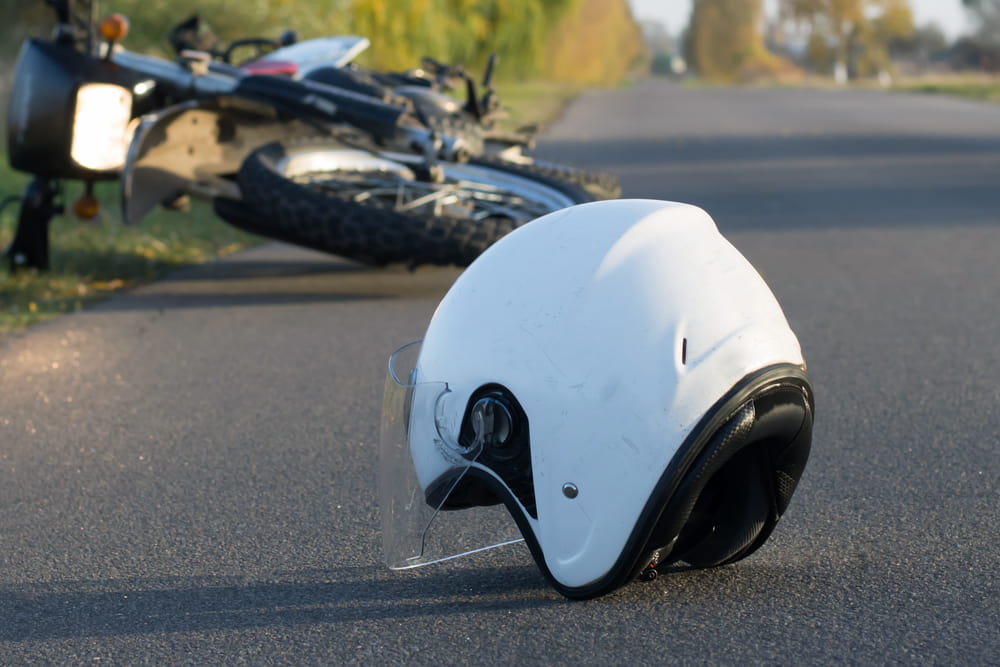
- Keeping your helmet, gloves, jacket, and boots as physical evidence even if they are damaged beyond use
- Following your doctor’s treatment plan without gaps, because missed appointments give the insurer a reason to question your injuries
- Declining to give recorded statements to the other driver’s insurance company before speaking with an attorney
The first recorded statement you give to the at-fault driver’s insurer becomes a permanent part of their file. Anything you say may be used to minimize your claim or assign you partial fault.
FAQs for Detroit Motorcycle Accident Lawyers
How long do I have to file a motorcycle accident lawsuit in Detroit?
Michigan’s statute of limitations (MCL 600.5805) gives you three years from the date of the crash to file a personal injury lawsuit. Your No-Fault PIP claim has separate deadlines for submitting benefit applications.
Starting the legal process well before the three-year mark gives your attorney time to collect evidence and build the strongest liability case.
What happens if the insurance company says my injuries were pre-existing?
Insurers frequently argue that a rider’s injuries existed before the motorcycle crash. Michigan law does not bar recovery for aggravation of a pre-existing condition.
If the crash made an existing condition worse, the at-fault driver may still be liable for the additional harm. Medical records comparing your condition before and after the crash directly address this defense.
What is the serious impairment threshold for motorcycle cases?
Serious impairment of body function under MCL 500.3135 means an objectively manifested impairment of an important body function that affects your general ability to lead your normal life.
Most motorcycle crash injuries meet this standard because of the severity of the impact. Meeting this threshold allows you to file a third-party pain and suffering claim against the at-fault driver.
What if I was lane splitting when the accident happened?
Michigan law does not explicitly address lane splitting, and it is generally treated as unlawful under existing traffic statutes. If you were filtering between lanes at the time of the crash, the insurance company may use that fact to argue comparative fault.
However, the other driver’s negligence does not disappear because of your lane position. An attorney evaluates whether the lane splitting actually contributed to the collision or whether the other driver’s actions were the primary cause
I only have motorcycle insurance with no car policy. What pays my medical bills?
If you carry no separate auto insurance with PIP, your medical coverage after a motorcycle crash depends on other sources. A spouse’s or household member’s auto policy may cover you.
If none exists, the at-fault driver’s insurer may owe PIP benefits. As a final option, the Michigan Assigned Claims Plan may provide coverage.
We review your full insurance picture during the initial consultation to identify every available benefit.
The police report says the other driver was at fault. Do I still need a lawyer?
Yes, speaking with a motorcycle accident attorney is a good idea even when the police report supports your version of events.
The at-fault driver’s insurer is not bound by the police report and may still argue you share fault. An attorney makes sure the evidence supports your claim and that you do not accept a settlement that undervalues your injuries.
What if the driver who hit me fled the scene?
You may still pursue a claim after a hit-and-run motorcycle accident in Detroit. Uninsured motorist coverage on your own auto or motorcycle policy may apply if the at-fault driver is not identified.
Filing a police report immediately gives law enforcement the best chance of locating the vehicle through witness descriptions, traffic cameras, or business surveillance footage near the crash site.
Get a Detroit Motorcycle Accident Lawyer Involved Before the Insurer Defines the Narrative
The at-fault driver’s insurance company starts building its case the moment it receives notice of the crash. Without an attorney reviewing the evidence early, the insurer controls what facts get emphasized and what facts get buried. That imbalance grows wider with every week that passes.
Goodman Acker represents motorcycle riders across Detroit, Wayne County, Southfield, Sterling Heights, and the Metro Detroit area. We review the police report, map out your insurance coverage, and give you a direct assessment of your claim’s strengths and risks.
Call 248-861-8100 and speak with a motorcycle accident attorney who handles these claims in Wayne County and across Michigan.
Goodman Acker P.C.
Serving Detroit from Our Southfield Headquarters
Two Towne Square, Suite 444
Southfield, MI 48076
Phone:
248-861-8100
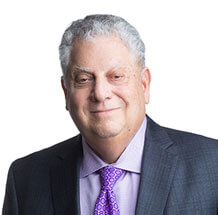
LEGALLY REVIEWED BY BARRY J. GOODMAN
Barry J. Goodman has devoted his professional life to keeping courthouse doors open for victims seeking justice. Always a tireless advocate for his own clients, Goodman sees his responsibility as a Detroit personal injury attorney in a broader sense as well. [ Attorney Bio ]


GOODMAN ACKER
Meet our Personal Injury Attorneys