
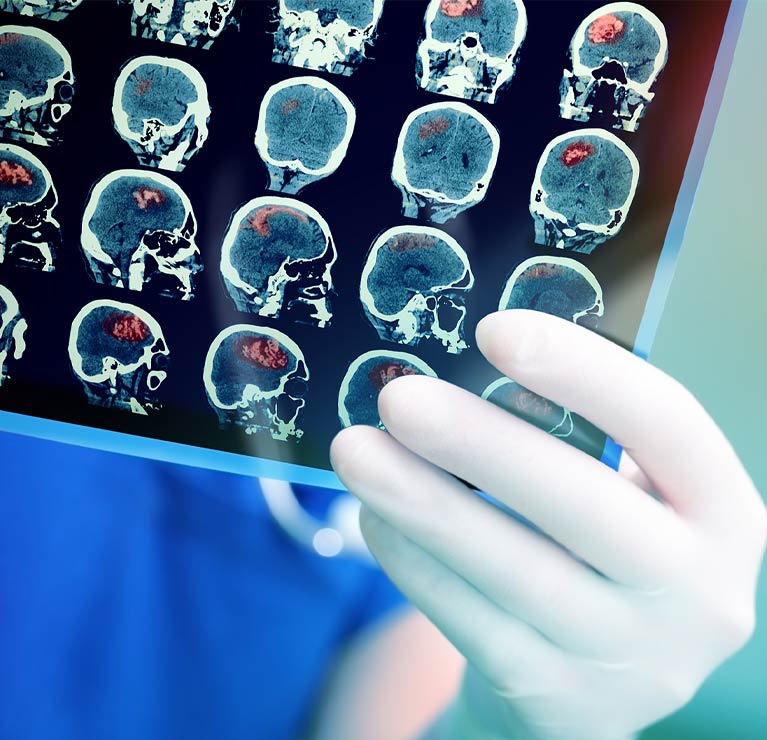
A normal head CT does not rule out a concussion or other traumatic brain injury. CT scans are primarily used in the emergency setting to identify bleeding, fractures, and other urgent structural problems, while some symptoms may not become clear until days or weeks after a crash.
Headaches, memory gaps, mood shifts, and difficulty concentrating often surface days after the injury and get dismissed as stress, sleep loss, or unrelated causes.
A Detroit traumatic brain injury lawyer at Goodman Acker, P.C. can review your medical timeline, identify gaps in your records, and work with treating providers and qualified experts when appropriate to document the injury and how it has affected your life.
Our firm can then pursue compensation from responsible drivers, property owners, companies, or other liable parties. Call 248-861-8100 to have our team review your medical records and crash file.
How Goodman Acker Builds Detroit TBI Cases That Rely on More Than the ER Report
Goodman Acker approaches every Detroit brain injury lawyer file by treating the emergency-room record as a starting point rather than the whole medical case.
Trauma centers stabilize patients and rule out life-threatening bleeds; they generally do not run the neuropsychological workups that document the cognitive deficits a TBI produces. Our job is to build the medical record the ER did not.
Steps we take on a Detroit TBI case include:
- Requesting the complete medical file, including nursing notes and imaging discs, from every treating facility
- Coordinating with the client’s primary care and neurology providers to document post-injury symptom onset and progression
- Retaining a qualified neuropsychologist to conduct formal cognitive testing when the medical picture supports it
- Working with a life care planner to project long-term care, therapy, and vocational rehabilitation needs
- Preparing the case for trial in Wayne County Circuit Court from the beginning
Our attorney fee is contingent on a recovery. Our firm may advance case expenses subject to the terms of the fee agreement, and no attorney fee is owed if no recovery is made.

What Are the Severity Levels of a Traumatic Brain Injury?
Traumatic brain injuries fall into three general clinical severity levels: mild, moderate, and severe. The severity level shapes the medical documentation the case needs, the categories of damages available, and the long-term care picture a life care planner has to model.
| Severity Level | Common Clinical Markers | Legal and Care Implications |
| Mild TBI (concussion) | Brief or no loss of consciousness, normal or near-normal CT, post-concussive symptoms | Often the hardest to prove; requires neuropsych testing and symptom documentation |
| Moderate TBI | Loss of consciousness minutes to hours, abnormal imaging, cognitive deficits | Typically shows on imaging; requires documentation of functional impairment |
| Severe TBI | Extended loss of consciousness, significant imaging abnormalities, lasting deficits | Frequently qualifies as catastrophic injury; long-term care claim central to case |
Mild TBI and Concussion
Mild traumatic brain injuries, often called concussions, produce cognitive and emotional symptoms that persist for weeks, months, or in some cases years after the initial injury. The mild label refers to the clinical presentation, not to how much the injury disrupts the person’s life.
Many mild TBI clients experience real difficulty at work, in school, and in their relationships even though initial imaging came back normal.
Moderate TBI
Moderate traumatic brain injuries generally show on imaging and involve a documented period of altered consciousness.
Recovery timelines vary substantially, and lasting cognitive, physical, and behavioral deficits often require ongoing therapy and workplace accommodations.
Severe TBI
Severe traumatic brain injuries produce lasting and often permanent cognitive, physical, and behavioral impairments. These cases typically involve extended hospitalization, inpatient rehabilitation, and lifetime care needs.
They may also support a claim for noneconomic damages when the injury meets Michigan’s serious-impairment-of-body-function threshold.
Why Do Standard ER Imaging Studies Miss So Many Brain Injuries?
Standard emergency-room head CT scans are built to detect bleeding, skull fractures, and other structural injuries that need immediate surgical attention.
They are not built to detect the diffuse axonal injury and microscopic damage that produce most mild and many moderate TBI symptoms. A normal head CT does not rule out a brain injury.
More sensitive imaging and testing that may document a TBI missed on an initial CT include:
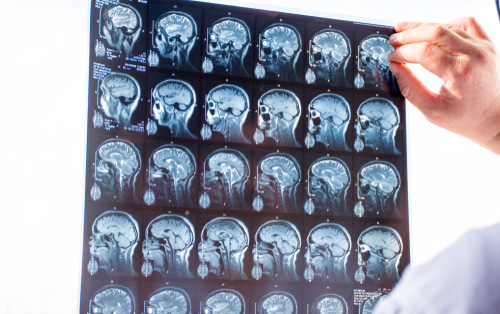
- Magnetic resonance imaging (MRI) with specific sequences designed to detect diffuse axonal injury
- Diffusion tensor imaging (DTI), which visualizes damage to white matter tracts
- Formal neuropsychological evaluation, which measures cognitive function against age-normed baselines
- Vestibular and balance testing for post-concussive dizziness and coordination symptoms
- Detailed serial clinical documentation of symptom onset, duration, and progression
Bridging the gap between the clean ER scan and the documented deficits the client is experiencing is often the central medical-legal task in a Detroit TBI case.
What Causes Most Traumatic Brain Injuries in the Detroit Area?
Most traumatic brain injuries in the Detroit area come from a limited set of high-force events. Motor vehicle crashes on the region’s freeways generate the largest share of TBI files, but falls, workplace incidents, and assaults also account for meaningful numbers.
Common TBI causes we see in Detroit-area cases include:
- Car and motorcycle crashes on I-75, I-94, the Lodge Freeway, Gratiot Avenue, and Woodward Avenue
- Commercial truck and semi-truck collisions producing severe closed-head injuries
- Pedestrian and bicycle crashes on high-traffic Detroit corridors
- Slip, trip, and fall incidents on commercial and residential property
- Construction site injuries involving falls from height or falling objects
- Assaults and other violent incidents giving rise to third-party liability claims
Each cause produces a different liability picture, but the underlying medical-legal work of documenting the brain injury and its consequences follows the same general pattern regardless of how the injury happened.
Does Michigan No-Fault Cover Long-Term Brain Injury Care?
Michigan’s no-fault auto insurance statute (MCL 500.3101 et seq.) provides personal injury protection (PIP) benefits for injuries from motor vehicle crashes, and the level of coverage depends on the tier the injured person or their household selected under Michigan’s post-2019 no-fault framework.
People who kept unlimited PIP coverage generally have access to lifetime allowable medical benefits, subject to the statutory framework and fee schedule.
Attendant Care and In-Home Support
Severe brain injury clients often require attendant care provided by family members or hired caregivers in the home. Michigan no-fault has specific rules governing what qualifies as compensable attendant care, at what rate, and under what documentation standards.
Getting the attendant care claim right is often one of the largest financial issues in a severe TBI case.
Coverage Tier Confirmation
The first step on the no-fault side of a TBI case is confirming what coverage tier applies to the injured person’s household.
Reduced-tier coverage may cap available medical benefits in ways that materially affect long-term care planning and the value of the third-party bodily injury claim against the at-fault driver.
What Damages May Be Recoverable in a Detroit TBI Case?
Damages in a Detroit traumatic brain injury case fall into several categories that a Detroit TBI attorney documents through medical records, expert testimony, and economic analysis.
Available categories depend on whether the case involves a motor vehicle crash governed by Michigan no-fault, a premises liability claim, or another liability theory.
Categories of damages a Michigan traumatic brain injury attorney typically pursues include:
- Medical expenses and long-term care benefits available through applicable no-fault coverage, along with damages that may be available in a third-party claim against the at-fault party
- Attendant care benefits under Michigan no-fault, where applicable
- Lost wages during the recovery period and reduced future earning capacity
- Pain, suffering, and other non-economic damages under the third-party liability claim
- Vocational rehabilitation and workplace accommodation costs
- Life care planning costs for severe TBI clients with lasting impairments
The economic loss model in a severe TBI case often runs into seven figures because of the combined cost of long-term care, lost earning capacity, and non-economic damages tied to permanent cognitive impairment.
How Long Do You Have to File a Detroit Brain Injury Lawsuit?
The filing deadline for a Detroit brain injury lawsuit depends on the underlying legal claim. A general negligence claim for a car crash or a fall typically follows Michigan’s three-year limitations period under MCL 600.5805, but other rules and shorter notice windows may apply depending on the defendant.
Deadline situations that affect Detroit TBI cases:
- Claims against governmental entities may require written notice within short statutory windows
- Michigan no-fault benefits require timely written notice to the insurer, generally within one year
- One-year-back rule limits recovery of PIP benefits to expenses incurred in the year before the lawsuit is filed
- Wrongful death TBI claims under MCL 600.2922 require a Personal Representative appointment before filing
Because Michigan no-fault has its own set of shorter deadlines separate from the negligence limitations period, brain injury cases involving a motor vehicle crash often have a filing timeline that runs shorter than three years for at least part of the available recovery.
FAQs for Detroit Traumatic Brain Injury Lawyer
How do I prove I have a TBI if my CT scan came back normal?
Yes, you may prove a TBI even with a normal head CT, because standard emergency-room imaging is not built to detect the diffuse axonal injury that causes most mild and many moderate brain injuries.
Proof typically comes through advanced imaging like MRI or diffusion tensor imaging, formal neuropsychological testing, and detailed medical documentation of your symptoms.
What if my brain injury symptoms did not appear until days after the Detroit crash?
Yes, you may still have a valid TBI claim if symptoms surfaced days or weeks after the crash, because delayed symptom onset is common in brain injuries.
Documenting when symptoms appeared and how they progressed with treating providers helps counter defense arguments that the symptoms are unrelated to the crash.
Do I have a case if I never lost consciousness?
Yes, you may have a brain injury case even if you never lost consciousness. Michigan law and current medical understanding recognize that traumatic brain injuries, particularly mild TBIs and concussions, often occur without any loss of consciousness at all.
How much is a Detroit brain injury case worth?
It depends. Case value depends on the severity of the injury, the strength of the medical documentation, the applicable no-fault coverage tier, the at-fault party’s insurance limits, and the long-term care and earning capacity picture, and no attorney may honestly quote a value without reviewing the specific case.
Do I need a Detroit brain injury lawyer or can my regular auto accident attorney handle it?
Maybe, but TBI cases involve medical-legal issues that many general auto accident attorneys do not routinely handle.
Neuropsychological evidence, life care planning, catastrophic injury coverage disputes, and long-term damages modeling all benefit from counsel who works these cases as a distinct category rather than as a subset of auto claims.
Have Your Medical Records Reviewed for the Documentation a Detroit Brain Injury Case Requires
One of the most important early steps in a Detroit traumatic brain injury case is reviewing the medical record to determine what has already been documented and whether additional evaluation or testing may be appropriate.
Gaps in the record can make it harder to connect the injury to the cognitive, physical, and functional problems the person is experiencing.
Goodman Acker, P.C. represents traumatic brain injury clients throughout Detroit, Wayne County, and the greater metropolitan area from our Southfield office.
Call 248-861-8100 to have your medical records reviewed and speak with a Detroit traumatic brain injury lawyer about your legal options.
Goodman Acker P.C.
Serving Detroit from Our Southfield Headquarters
Two Towne Square, Suite 444
Southfield, MI 48076
Phone:
248-861-8100

LEGALLY REVIEWED BY BARRY J. GOODMAN
Barry J. Goodman has devoted his professional life to keeping courthouse doors open for victims seeking justice. Always a tireless advocate for his own clients, Goodman sees his responsibility as a Detroit personal injury attorney in a broader sense as well. [ Attorney Bio ]


GOODMAN ACKER
Meet our Personal Injury Attorneys
goodman acker. GOOD DECISION.
Why It’s Important to Contact Goodman Acker Quickly
WE’RE READY TO HELP YOU TODAY
Dealing with a serious brain injury is overwhelming. We understand the challenges and are here to provide the support and guidance you need. Our Detroit brain injury lawyers will fight aggressively to get you the compensation you deserve. Brain injuries can drastically change your life, affecting your physical, cognitive, and emotional well-being.With years of success in personal injury law, our attorneys are committed to fighting for your best interests. Call us today at 1-800-TRUSTED for your free consultation.