

When a crash has left you hurt and dealing with calls from insurers, you need someone in your corner who knows how Michigan’s auto insurance system really works.
Goodman Acker, P.C. helps people injured in Detroit car accidents pursue the no-fault benefits and injury compensation Michigan law allows.
As a Detroit car accident lawyer team, we handle claims arising from crashes on city streets, the freeways, and everywhere in between across Wayne County.
Michigan’s system is unlike most other states, and the choices on your own policy can shape your claim as much as the other driver’s actions.
If you were injured in a Detroit crash, contact Goodman Acker to talk through your situation and the claims that may apply.
How Goodman Acker Handles Detroit Car Accident Claims

Car accident cases are the core of what Goodman Acker, P.C. does.
From our Southfield office near Detroit, we represent injured drivers and passengers across Wayne County, Oakland County, and Macomb County, handling the no-fault claim and the injury claim as one coordinated case.
Our approach to a Detroit car accident claim typically includes:
- Reviewing your declarations page and every household policy to find all available PIP and UM/UIM coverage
- Sending timely notice and tracking the one-year and three-year deadlines from day one
- Collecting the police report, scene photos, video, and witness accounts while they are available
- Building the medical and daily-life record needed to meet the serious impairment standard
- Negotiating with insurers and preparing the case for court when a fair resolution is not offered
Results depend on the facts of each case, and no attorney can promise a specific outcome. What we offer is close attention to the details of Michigan no-fault law that often decide these claims.
To talk about your Detroit car accident, contact Goodman Acker and our team will explain what comes next.
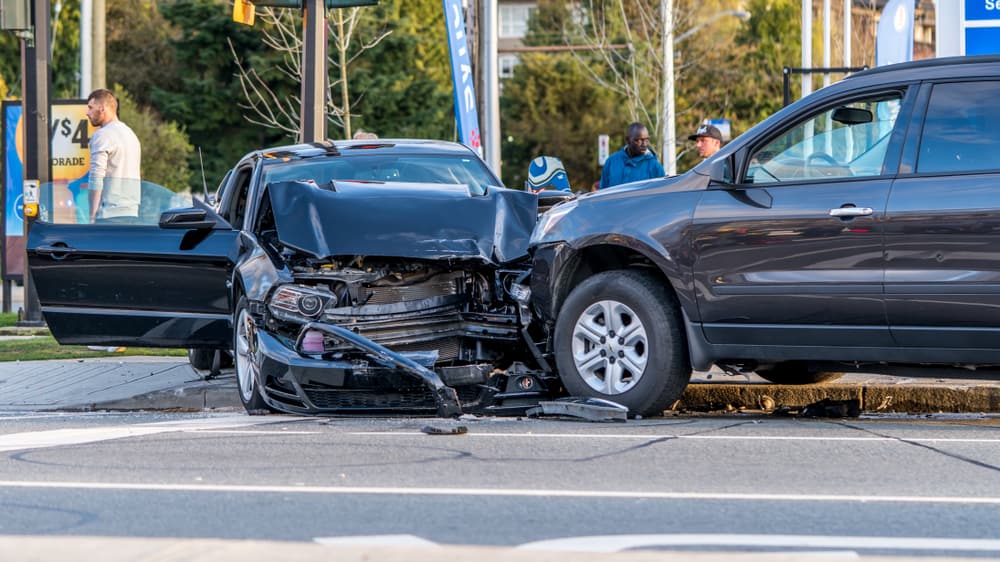
What Should You Do After a Car Accident in Detroit?
The steps you take in the first days after a Detroit car accident protect both your no-fault claim and any claim against the at-fault driver. Many people find these steps helpful to keep in mind:
- Report the crash to police. A police report creates an early record of the drivers, vehicles, insurers, and witnesses involved.
- Get medical care and keep going. Prompt treatment and consistent follow-up create the medical record that supports both PIP benefits and the tort threshold.
- Give written notice to your no-fault insurer. Michigan requires notice of a PIP claim within one year, and filing early prevents gaps in payment.
- Identify every possible coverage source. This includes your own PIP coverage, the other driver’s liability coverage, and any uninsured or underinsured motorist coverage you purchased.
- Be careful with recorded statements. The at-fault driver’s insurer may ask for one quickly, and early statements are often used to dispute fault or injuries later.
Each step serves a legal purpose, so skipping one can create problems that are hard to fix months later.
Which PIP Coverage Level Applies to Your Claim?
Since Michigan’s 2019 no-fault reform, drivers choose a personal injury protection (PIP) medical coverage level, and that choice controls how much of your medical care your own insurer will pay after a crash. The options are set out in MCL 500.3107c.
| PIP medical option | Who can choose it | What it means after a crash |
|---|---|---|
| Unlimited | Any driver | Reasonable and necessary medical care is covered without a dollar cap |
| $500,000 | Any driver | Medical coverage ends once $500,000 is paid per person per crash |
| $250,000 | Any driver | Medical coverage ends once $250,000 is paid per person per crash |
| $250,000 with exclusions | Drivers whose household members have qualifying health coverage | Covered household members rely on that health coverage instead |
| $50,000 | Drivers enrolled in Medicaid whose spouse and resident relatives also meet Michigan’s coverage requirement | A much lower limit that can run out quickly after a serious injury |
| Opt out | Drivers with Medicare Parts A and B whose spouse and resident relatives also have qualifying health or PIP medical coverage | No PIP medical coverage for the opted-out person |
Many Detroit drivers do not remember which level they selected until after a crash. Pulling the declarations page early shows how much room the PIP claim has and whether medical expenses beyond the limit will need to come from the at-fault driver.
When Does Michigan Let You Sue the At-Fault Driver?
Michigan allows an injury claim against the at-fault driver for pain and suffering when the crash causes death, serious impairment of body function, or permanent serious disfigurement under MCL 500.3135.
Below that threshold, no-fault benefits are generally the main source of recovery.
What Counts as a Serious Impairment of Body Function
In McCormick v. Carrier, the Michigan Supreme Court held that a serious impairment must be objectively manifested, affect an important body function, and affect the person’s general ability to lead a normal life.
The injury does not need to be permanent, and the comparison is to the injured person’s own life before the crash.
Medical Bills and Wages Beyond Your PIP Limit
Because many drivers now carry limited PIP coverage, the claim against the at-fault driver for excess economic losses has become far more important.
Medical expenses above your PIP limit and wage loss beyond what PIP pays can be pursued against the driver who caused the crash.

Recovering Vehicle Damage With a Michigan Mini-Tort Claim
Michigan no-fault insurance does not pay to repair your own car unless you carry collision coverage. A mini-tort claim lets you recover up to $3,000 from an at-fault driver for vehicle damage your insurance did not cover, such as a collision deductible.
How Fault Affects a Mini-Tort Claim
A mini-tort claim is available only if you were not more than 50% at fault, and any recovery is reduced by your share of fault. These claims are usually small enough to be handled in district court, and they can proceed separately from any injury claim.
What If the Driver Who Hit You in Detroit Had No Insurance?
Uninsured and underinsured drivers are a real concern on Detroit roads, and the answer depends heavily on the coverage you purchased. Your own PIP benefits still apply regardless of the other driver’s insurance status.
Coverage that may help after a crash with an uninsured or underinsured driver includes:
- Uninsured motorist (UM) coverage: optional coverage on your own policy that can pay injury damages the uninsured driver would have owed
- Underinsured motorist (UIM) coverage: optional coverage that can apply when the at-fault driver’s liability limits are too low for your losses
- The at-fault driver’s personal assets: sometimes available, though collecting directly from an uninsured individual is often difficult
UM and UIM coverage are contract benefits, so the policy’s notice rules, physical-contact requirements, and deadlines matter. Reviewing the actual policy language early avoids surprises.
What Compensation Can a Detroit Car Accident Claim Include?
A Detroit car accident claim can include both no-fault benefits from your own insurer and damages from the at-fault driver. The two sources cover different losses, so understanding the split helps you see what each claim is meant to recover.
Benefits Paid Through No-Fault PIP
PIP benefits can pay reasonable and necessary medical expenses up to your chosen limit, 85% of lost gross wages for up to three years subject to a monthly maximum, replacement services for household tasks you cannot perform, and mileage to medical appointments.
These benefits are paid regardless of fault, which is why they are often the first money to arrive after a crash.
Damages Recoverable From the At-Fault Driver
A claim against the at-fault driver can recover noneconomic damages, such as pain and suffering, loss of enjoyment of life, and emotional distress, once the tort threshold is met.
It can also recover excess economic losses that PIP did not pay, which matters most for people with lower PIP limits or long recoveries.
How Does Shared Fault Affect a Detroit Car Accident Claim?
Michigan reduces damages by the injured person’s percentage of fault under MCL 600.2959. A driver found more than 50% at fault cannot recover noneconomic damages from the other driver, although PIP benefits remain available regardless of fault.
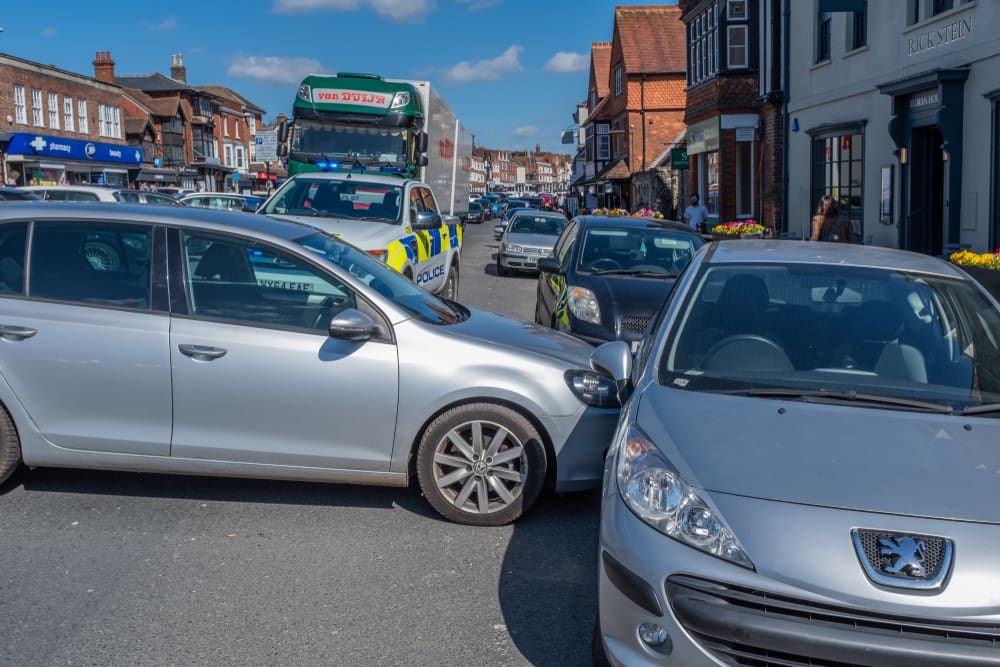
Freeway Crashes on I-94, I-75, and the Lodge
Crashes on Detroit’s freeways often involve higher speeds, multiple vehicles, and commercial traffic, which makes fault and coverage questions more complicated. These claims often turn on gathering evidence quickly before vehicles are repaired and video is overwritten.
Chain-Reaction and Multi-Vehicle Collisions
When several vehicles are involved, more than one driver may share fault, and each driver’s insurer may point at the others. Michigan apportions fault among the people responsible, so identifying every contributing driver can affect how much is recoverable.
Crashes Involving Commercial Vehicles or Work Zones
A crash with a delivery van or semi-truck can bring in the vehicle owner and the driver’s employer as additional parties with separate insurance.
Crashes tied to road defects in construction zones may involve government agencies, which come with short notice deadlines and special immunity rules.
How Long Do You Have to Act After a Detroit Car Accident?
Michigan car accident claims are governed by more than one deadline, and the shortest one usually comes first. Missing a deadline can end that part of the claim regardless of how strong it is.
The One-Year No-Fault Deadline
Written notice of a PIP claim must reach the insurer within one year of the crash, and a lawsuit over unpaid benefits generally must be filed within one year after the expense was incurred under MCL 500.3145. Tolling can apply while a properly submitted claim is pending.
The Three-Year Injury Lawsuit Deadline
A lawsuit against the at-fault driver for injuries generally must be filed within three years of the crash under MCL 600.5805. Exceptions, including extra time for minors, can change that date in some cases.
FAQs for a Detroit Car Accident Lawyer
Can I still get no-fault benefits if I wasn’t wearing a seat belt in Michigan?
Not wearing a seat belt does not take away your Michigan no-fault PIP benefits. In a claim against the at-fault driver, MCL 257.710e allows seat belt non-use to be considered as comparative negligence, but it limits the resulting reduction to 5%.
Can a passenger in a Detroit car accident make a claim?
A passenger injured in a Michigan crash usually claims PIP benefits through their own or a household relative’s auto policy first.
A passenger can also bring an injury claim against whichever driver caused the crash, including the driver of the car they were riding in, if the tort threshold is met.
Which court handles a car accident lawsuit in Detroit?
Car accident injury lawsuits arising in Detroit are typically filed in Wayne County Circuit Court when the amount in controversy exceeds $25,000. Smaller claims, including many mini-tort cases, are usually heard in the 36th District Court, which serves the City of Detroit.
How much does a car accident lawyer cost in Michigan?
Personal injury lawyers in Michigan usually work on a contingency fee, meaning the fee comes from a portion of any recovery rather than an upfront payment.
Michigan Court Rule 8.121 generally caps contingency fees in personal injury cases at one-third of the amount recovered after costs.
Does no-fault pay for a rental car while my car is being repaired?
Michigan no-fault PIP benefits do not cover a rental car. Rental reimbursement coverage on your own policy is the usual source of help, since a mini-tort claim is limited to damage to the vehicle itself.
When the at-fault driver was uninsured, rental costs and loss of use may be recoverable directly from that driver.
Protect Your Claim With a Detroit Car Accident Lawyer
A car accident can unsettle your health, your work, and your family’s routine all at once. Getting clear answers about your coverage and your rights is often the first thing that makes the situation feel manageable again.
Goodman Acker represents people injured in car accidents throughout Detroit and the surrounding communities. Contact our team to discuss what happened and how Michigan law applies to your claim.
Goodman Acker P.C.
Serving Detroit from Our Southfield Headquarters
Two Towne Square, Suite 444 Southfield, MI 48076
Phone: 248-861-8100

LEGALLY REVIEWED BY BARRY J. GOODMAN
Barry J. Goodman has devoted his professional life to keeping courthouse doors open for victims seeking justice. Always a tireless advocate for his own clients, Goodman sees his responsibility as a Detroit personal injury attorney in a broader sense as well. [ Attorney Bio ]

Why Insurance Companies Bully their Clients
goodman acker. GOOD DECISION.
Your Car Accident Lawyer.
- Answer all your questions, including who is responsible for your medical bills and whether or not you need an attorney to represent you.
- Represent you under a contingency fee agreement, which means there are no costs or fees whatsoever unless you win a settlement or recovery.
- Charge no upfront fees so you never have to worry about picking up the phone and being billed to ask questions or learn if you have a case.
- Handle your no-fault insurance claim and help you attain the benefits you deserve, such as reimbursement for medical bills and lost wages, attendant care services, and more.
- Work with the insurance adjuster so you don’t have to and can concentrate on your recovery.
- Obtain all necessary evidence to help you win your case, including police reports, medical records, witness statements, and more.
- Guarantee first-hand, personal attention so you achieve the best possible settlement for your case.
We have an unparalleled success rate of 99%. Free initial consultation: 1-800-TRUSTED.