

- January 19, 2026

The immediate aftermath of a car crash is a blur of flashing lights, the exchange of information, and the jarring reality of a damaged vehicle. Your focus is on the immediate problems: dealing with the police, figuring out a tow, and checking for injuries.
The last thing on your mind is the piece of paper that will arrive in your mailbox six months from now—your auto insurance renewal notice.
For many Dearborn drivers, that renewal notice brings a second shock. The premium, already one of the highest in the state, may have jumped by a staggering amount. It can feel like a penalty that lasts far longer than any physical bruise, a constant financial reminder of a single moment on the road.
You start to question everything, wondering how this number was calculated and what you could have possibly done to deserve such a hike. This increase is not a random punishment.
It is a calculated business decision made by your insurance company based on a complex set of factors, including Michigan’s unique laws, your specific location in Dearborn, and most importantly, who was at fault for the accident.
Figuring out how much car insurance goes up after a Dearborn car accident requires looking at the specific rules that govern this process.
The financial reality of post-accident insurance in Dearborn:
- Michigan’s No-Fault law covers your initial medical bills, but a determination of fault is what drives insurance rate increases after a crash.
- Insurers in Michigan will typically only apply a surcharge if you are found to be more than 50% at fault for the collision.
- Your specific Dearborn zip code is a major factor in your base insurance rate, and an at-fault accident can amplify the already high costs associated with these territories.
- The Mini-Tort claim is a key legal tool that allows a not-at-fault driver to recover up to $3,000 for vehicle repair costs from the at-fault driver's insurer.
Why Does Fault Matter So Much in a No-Fault State?
One of the biggest points of confusion for Michigan drivers is the term No-Fault. While it sounds like blame does not matter, that is not the case. The No-Fault system was designed to streamline the payment of medical benefits, but it does not eliminate the concept of fault for all other purposes.
The true meaning of no-fault insurance
The No-Fault part of your policy primarily relates to your Personal Injury Protection (PIP) benefits. This is the coverage that pays for your own medical bills, a portion of your lost wages, and other related expenses after an accident, regardless of who caused it. You turn to your own insurance company first for these immediate needs.
This system was intended to ensure that injured people receive prompt medical care without having to wait for a lengthy court battle to determine fault. However, the law still assigns fault to determine responsibility for other damages.
The surcharge system for at-fault accidents
When an insurance company raises your rates after a crash, it is called a surcharge. This is a direct financial consequence of being deemed responsible for an accident. Your insurer sees you as a higher risk to insure in the future and adjusts your premium accordingly.
Dearborn drivers already face some of the highest insurance rates in Michigan. An at-fault accident surcharge on top of these high base rates can make insurance financially unsustainable for some families.
How your PIP choice may influence your policy review
While your PIP medical benefit choice does not directly cause a surcharge, any claim you make prompts a review of your policy and the accident details. The 2019 no-fault reforms allowed drivers to choose different levels of PIP coverage.
If you are in an accident, your insurer will not only process your PIP claim but will also conduct a full investigation to determine fault for liability purposes, which is the trigger for any potential rate hike.
What is the At-Fault vs. Not-At-Fault 50% Threshold?
Your insurance company cannot raise your rates simply because you were involved in an accident. Under Michigan law, they can typically only apply a surcharge if you were substantially at fault for the collision.
Defining substantially at fault in Michigan
The legal standard for this is being more than 50% at fault. If you are determined to be 50% or less at fault, your insurance company generally cannot increase your premium for that incident. This makes the official fault determination the single most important factor in your future insurance costs.
For example, if another driver runs a red light on Ford Road and T-bones your car, they will almost certainly be found 100% at fault. In this case, your insurer should not surcharge you. However, if you were making a left turn and collided with a driver who was speeding, an insurer might try to assign a percentage of fault to both of you.
How insurance companies investigate fault
Insurance companies have their own internal processes for assigning fault. They do not simply rely on one source of information. Their adjusters will conduct a detailed investigation.
This investigation typically includes:
- Reviewing the official Dearborn Police Department traffic crash report.
- Interviewing all drivers and passengers involved.
- Contacting any independent witnesses listed on the police report.
- Analyzing photos of the accident scene and vehicle damage.
- Sometimes, hiring an accident reconstructionist for very serious or complex crashes.
The adjuster will use all of this information to assign a percentage of fault, which will determine whether a surcharge is applied to your policy.
The Dearborn police report is a starting point, not the final word
The police report is a vital piece of evidence. It contains a diagram of the accident, the officer's narrative of events, and often, the officer's initial opinion of who violated a traffic law.
However, the officer’s conclusion about fault is not legally binding on the insurance company. An insurer may conduct its own investigation and come to a different conclusion. An attorney can help challenge an unfair fault determination made by an insurance company.
Local Impact: Why Your Dearborn Zip Code Matters
Your location within Dearborn plays a significant part in how much you pay for insurance, both before and after an accident.

Territorial base rates
Michigan law, specifically MCL 500.2111, allows insurance companies to use territorial base rates to help set premiums. This means they can charge different rates based on the claims history of a specific geographic area, such as a zip code.
The zip codes in Dearborn—48120, 48124, and 48126—are considered high-risk territories by many insurers due to population density and traffic volume. This means your insurance costs more just because of where you live, even with a perfect driving record.
The effect of accidents on Michigan Ave and Ford Rd
When an accident occurs on a high-traffic, high-risk road like Michigan Avenue or Ford Road, it reinforces the insurer's data that your territory is prone to accidents. An at-fault crash on one of these roads confirms their risk assessment, and the resulting surcharge will be applied to your already high territorial base rate. This combination is what leads to the extreme rate increases Dearborn drivers often experience.
How a crash record follows you
An at-fault accident becomes part of your driving record, which insurance companies review when you apply for or renew a policy. This record, combined with your high-risk zip code, can make it difficult to find affordable coverage.
The Mini-Tort Exception: Getting Your Deductible Back
While dealing with the financial consequences of an accident, there is one key tool that helps not-at-fault drivers recover some of their costs.
What is the mini-tort claim?
The Mini-Tort claim allows you to recover money from the at-fault driver’s insurance company to pay for your own out-of-pocket vehicle repair costs. This is most often used to get reimbursement for your collision deductible.
Who is eligible to file a mini-tort claim?
You are eligible to file a Mini-Tort claim if you were not at fault for the accident. As with insurance surcharges, the key is the 50% threshold. If you were less than 50% at fault, you can pursue this claim against the driver who was more than 50% at fault.
Recovering your $3,000
Under MCL 500.3135(3)(e), the maximum amount you can recover through a Mini-Tort claim is $3,000. The process typically involves sending a formal demand to the at-fault driver's insurance company with a copy of your repair estimate and proof that you paid your deductible. An attorney can handle this process on your behalf as part of your overall injury claim.
What Factors Determine How Much My Rate Will Actually Increase?
After an at-fault accident, the question of a rate hike is not a simple "if" but a more complicated how much. Insurance companies do not apply a single, flat-rate penalty for every incident. Instead, they use a detailed risk-assessment formula to calculate the specific surcharge for your policy. The final number depends on the unique circumstances of the crash and your personal history as a driver.
The severity of the at-fault accident
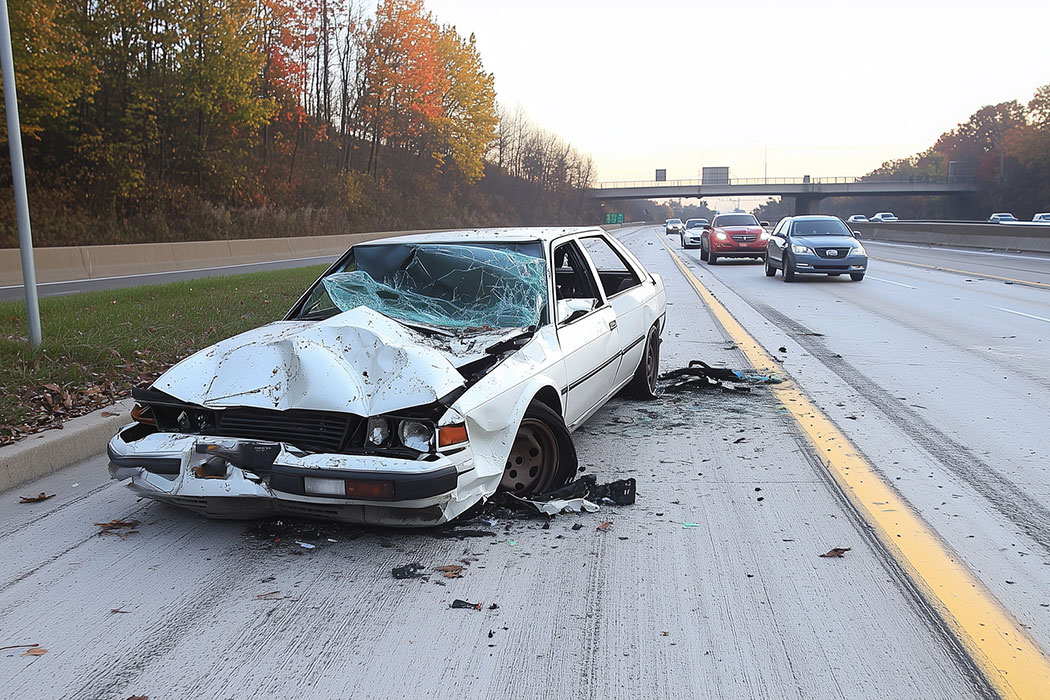
The most direct factor in the size of your rate increase is the seriousness of the crash itself. A minor fender-bender in a parking lot that results in a small property damage payout will be viewed very differently than a high-speed collision on the Southfield Freeway that causes serious injuries and totals multiple vehicles.
Your prior driving record
Your insurance company will view the accident within the context of your overall driving history. A driver with a 20-year clean record who has a single at-fault accident will likely see a less severe rate increase than a driver who has had other tickets or at-fault accidents within the past three to five years.
Accident forgiveness clauses
Some drivers may avoid a rate hike entirely if they had the foresight to purchase Accident forgiveness coverage before the crash occurred. This is an optional benefit that you can add to your policy for an additional cost. If you have this coverage, your insurer will waive the surcharge for your first at-fault accident.
FAQ for Car Insurance After a Dearborn Accident
Will my rates go up if the accident was not my fault?
Generally, if you are determined to be 50% or less at fault for the accident, your insurance company should not apply a surcharge to your policy for that incident. Your rates could still increase for other reasons at renewal, but not as a penalty for the crash itself.
How long does an accident stay on my insurance record?
An at-fault accident will typically impact your insurance rates for three to five years, depending on the insurance company and the severity of the accident. After this period, it may no longer be used to calculate a surcharge.
Can I switch to a different insurance company to avoid a rate hike?
You can always shop for a new insurance policy. However, all insurance companies have access to your claims history and driving record. While another company might offer a better rate overall, they will still factor your at-fault accident into their premium calculation.
Protecting Your Finances After a Collision

The harm caused by a car accident goes far beyond the initial injury. It creates long-term financial pressure that can affect your family for years. Challenging an unfair fault determination is not just about the injury claim; it is also about protecting yourself from years of inflated insurance premiums.
At Goodman Acker PC, our team looks at the full picture. We fight to secure fair compensation for your injuries while also working to ensure the accident is properly documented to protect your driving record.