

- November 28, 2025

In a Michigan t-bone accident, fault is typically assigned to the driver who violated the right-of-way, often by running a red light, ignoring a stop sign, or making an unsafe left turn.While this is the standard, it isn't the rule.Many factors could shift blame to the other driver, especially if they were engaging in illegal, reckless, or negligent behavior at the time of the crash.
Whether facing challenges about fault or fighting insurers trying to unfairly blame you for an accident that wasn’t your fault, partnering with legal professionals may help level the playing field.
During a free case evaluation, the experienced car accident lawyers from Goodman Acker, P.C. can provide legal insights to help you understand how to take the next steps forward after someone else’s negligence causes you harm on Michigan roadways.
Key Takeaways About Why Legal Representation Matters When Determining Who Is At Fault in a T-Bone Accident in Michigan
- Right-of-way violations often determine fault: Many t-bone accidents happen at intersections in Detroit or along I-75 service roads. Proving fault requires a deep understanding of Michigan traffic laws and the ability to gather evidence, which legal professionals actively manage.
- Michigan's comparative fault law impacts compensation: Under MCL 600.2959, your compensation decreases if you share fault. Insurance companies often push for higher fault percentages. A lawyer actively challenges unfair fault assignments and protects your right to recover the maximum compensation allowed under the law.
- Legal professionals uncover critical evidence: Insurance companies often attempt to shift blame, but an attorney thoroughly investigates the crash. They analyze police reports, traffic camera footage, and witness statements to build a case that clearly shows the other driver’s negligence.
- No-Fault law affects your ability to sue: Michigan’s No-Fault system covers initial medical bills and lost wages, but pursuing additional compensation for pain and suffering requires meeting the "serious impairment of body function" threshold. Legal guidance can help show that your injuries meet this standard.
- Liability often involves multiple parties: Determining fault can involve more than just the drivers. A government entity may share responsibility for a poorly designed intersection in Grand Rapids, or a vehicle manufacturer could face liability for a defect that contributed to the crash. Legal professionals identify all liable parties to maximize your recovery.
How is Fault Determined in a Michigan T-Bone Accident?
T-bone, or side-impact, collisions are among the most dangerous types of accidents, often resulting in severe injuries. However, determining fault is not always as simple as blaming the driver who caused the "T-boning."
Instead, it comes down to proving which driver acted negligently by violating a traffic law or failing to drive with reasonable care and caution.
A thorough investigation is necessary to establish liability. This process often involves:
- Reviewing the police report: The responding officer’s report will contain initial findings about the crash, including diagrams, driver and witness statements, and any citations issued at the scene. While not always conclusive, the police report in a Michigan t-bone accident is a critical piece of evidence.
- Analyzing physical evidence: Evidence from the crash scene, such as the location of vehicle damage, skid marks, and debris, can help an accident reconstructionist recreate the sequence of events and determine factors like speed and angle of impact.
- Gathering witness statements: Independent witnesses can provide an unbiased account of what happened. Their testimony about which driver had the green light or who failed to stop can be invaluable, especially when drivers dispute the facts.
- Obtaining electronic data: Modern vehicles are equipped with "black boxes" or event data recorders (EDRs). The black box data from a Michigan car accident can provide valuable information on speed, braking, and steering in the moments leading up to the collision.
- Securing video footage: Many intersections, particularly major Detroit intersections or those along M-59 in Sterling Heights, are monitored by traffic cameras. Nearby businesses may also have surveillance cameras that captured the crash. This footage can provide indisputable proof of who was at fault.
An attorney can manage this entire investigative process, compiling the evidence needed to build a case that clearly demonstrates the other driver's responsibility.
Common Causes of T-Bone Collisions in Michigan
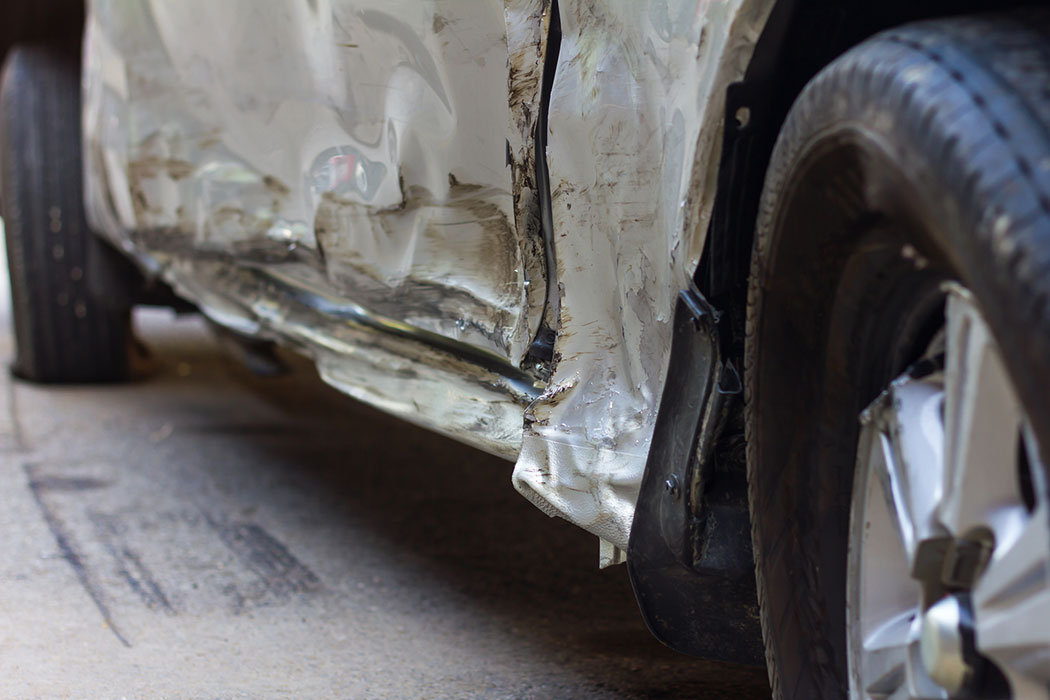
Side-impact crashes are almost always preventable and typically stem from a driver's error or recklessness. Understanding the common causes can help clarify when you may need to seek legal support to recover compensation for damages and losses caused by someone else's negligent actions:
- Failure to yield the right of way: This is the most frequent cause. It includes running a red light or stop sign, or making a left turn into the path of an oncoming vehicle. Michigan right-of-way laws at intersections are clear, and violating them is a strong indicator of negligence.
- Distracted driving: A driver who is texting, talking on the phone, or otherwise not paying attention may fail to notice a changing light or an approaching vehicle, leading to a devastating collision. Distracted driving and t-bone accidents are an increasingly common combination on busy roads.
- Speeding: A driver who is speeding has less time to react to changing traffic conditions and may be unable to stop in time to avoid a crash. Speeding and t-bone crashes often result in catastrophic injuries due to the high force of impact.
- Driving under the influence: Alcohol or drugs impair a driver's judgment, reaction time, and coordination, making them a significant danger at intersections.
- Weather conditions: While poor weather is not an excuse for negligence, drivers have a duty to adjust their driving to account for conditions such as rain, snow, or fog. Failing to slow down or use caution can contribute to fault.
In any of these scenarios, proving negligence in a Michigan t-bone accident is the key to holding the responsible driver accountable.
If you are having trouble demonstrating who is really at fault for your sideswipe or t-bone collision, contact the personal injury attorneys at Goodman Acker, P.C., to explore your legal rights and options during a free case evaluation.
The Role of Michigan’s Comparative Negligence Law in Auto Accidents
What happens when both drivers are at fault in a T-bone crash? Michigan follows a "modified comparative negligence" rule, also known as the 51% bar rule for car accidents. This law has a major impact on your ability to recover compensation.
Under this rule, you can still seek damages even if you were partially responsible for the accident, as long as your share of fault is determined to be 50% or less. If so, your total compensation will be reduced by your percentage of fault.
For instance, if you are awarded $200,000 in damages but are found to be 25% at fault for the crash, your final award would be reduced by 25% to $150,000.
However, if you are found to be 51% or more at fault, you are barred from recovering any non-economic damages, which include compensation for pain and suffering.
Insurance companies are well aware of this rule and often use it to their advantage.
An adjuster might try to argue that you share a significant portion of the blame to reduce or eliminate their payout.
This is why having a legal advocate who can effectively counter these arguments and protect your right to compensation is so important.
What Is the Average Payout for a T-Bone Car Accident Settlement?
The financial impact of a t-bone car accident can be staggering, especially when serious injuries are involved.
In Michigan, the cost of medical treatment for injuries like spinal cord damage, traumatic brain injuries, or multiple fractures can reach hundreds of thousands of dollars upfront.
For injuries requiring long-term care, such as paralysis or permanent disabilities, lifetime treatment costs can climb into the millions.
These expenses often include:
- Emergency medical care and hospitalization: Ambulance rides, ER visits, and surgeries can result in tens of thousands of dollars in immediate costs.
- Rehabilitation and physical therapy: Ongoing treatment for mobility or cognitive recovery can add significant expenses over time.
- Assistive devices and home modifications: Wheelchairs, prosthetics, or retrofitting a home for accessibility can cost tens of thousands of dollars.
- Lost income and reduced earning capacity: Severe injuries may prevent victims from returning to work, leading to long-term financial strain.
Without experienced legal support, accident victims may struggle to recover the full compensation needed to cover these costs.
Attorneys can advocate for your rights, ensuring that all damages are accounted for and that you are not unfairly held responsible for costs stemming from someone else’s negligence.
Michigan T-Bone Accident Liability FAQs
What should I do immediately after a t-bone accident?
Call 911, document the scene, and seek medical attention. Avoid discussing fault with the other driver. A lawyer can help preserve evidence and protect your rights from the start.
Can I still sue the at-fault driver under Michigan’s No-Fault law?
It may be possible if your injuries meet the "serious impairment of body function" threshold. A lawyer can evaluate your case and advocate for the compensation you may be entitled to under Michigan law.
Who pays for the damage to my car?
You may be able to file a claim with your own insurance or recover up to $3,000 under Michigan’s mini-tort law. A lawyer can guide you through the process and address disputes over fault.
What if the other driver’s insurance company blames me for the accident?
Insurance companies often shift blame to reduce payouts. A lawyer can challenge unfair fault determinations and present evidence to protect your claim.
What do I do if I was injured in an Uber or Lyft t-bone accident?
Rideshare accidents involve complex insurance policies and liability issues. A lawyer can identify the responsible parties and ensure you pursue compensation from the appropriate insurance coverage.
How long do minors have to pursue compensation after a car accident in Michigan?
Minors have until one year after their 18th birthday to file a claim, regardless of when the accident occurred. A lawyer can help ensure the claim is filed within the appropriate timeframe.
What do I do if someone dies in a t-bone accident?
A wrongful death claim may provide compensation for funeral expenses, loss of income, and emotional suffering. A lawyer can guide you through the process and advocate for justice on behalf of your loved one.
A Personal Injury Lawyer From Goodman Acker, P.C., Can Help Demonstrate Fault in Your T-Bone Accident
 T-bone accidents can leave victims with devastating injuries and a complicated legal road ahead.
Insurance companies may try to dispute liability or argue that your injuries are not serious enough to warrant compensation for pain and suffering.
Partnering with dedicated legal support can help level the playing field, allowing you to recover the maximum compensation you may be eligible for under the law.
From investigating the crash and gathering evidence to negotiating with insurers and fighting for you in court, a Michigan car accident lawyer from Goodman Acker, P.C., can manage every aspect of your claim.
Were you injured in a side-impact collision and are now facing a dispute over fault? Contact Goodman Acker, P.C. online or at (248) 831-1507 for a free consultation to discuss your case and learn how we can help.
Contact us online, and let us safeguard your rights and future.