

- December 19, 2025
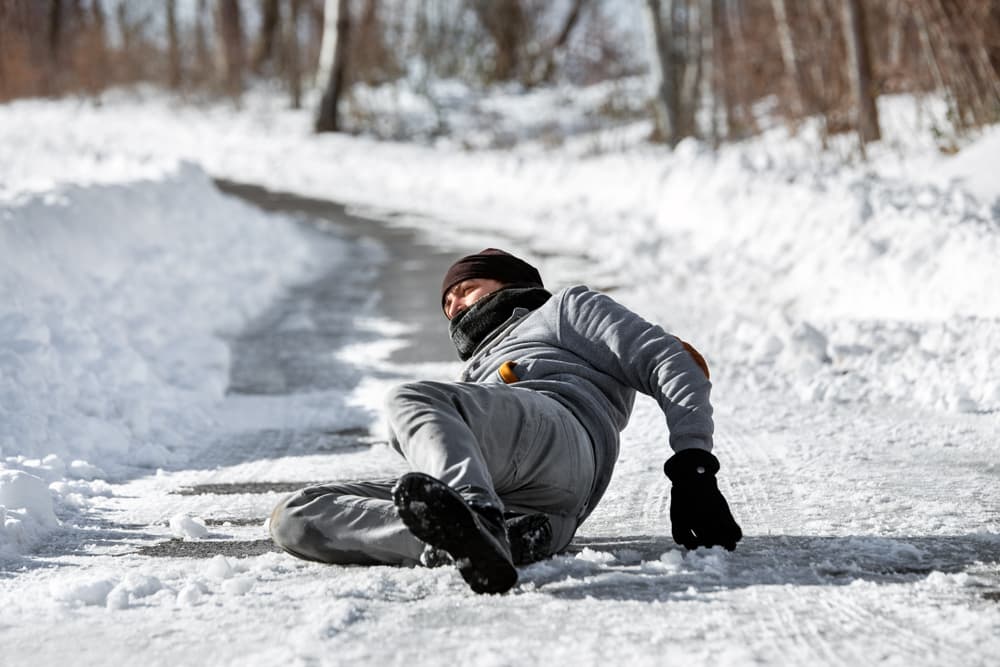
A winter walk in Michigan can become hazardous without warning. An unseen ice patch on a sidewalk or a snow-covered parking lot can cause a serious injury, creating unexpected medical bills and legal questions.
After a slip and fall on ice and snow, you need to know who is responsible.
What to know about a slip and fall on ice and snow
- Property owners in Michigan must take reasonable steps to make their premises safe from snow and ice hazards. This duty applies to businesses, landlords, and management companies.
- Michigan’s open and obvious doctrine has changed. The visibility of a hazard no longer automatically prevents a claim. A jury may now weigh it as part of a comparative fault analysis.
- The type of property where you fell is significant. Commercial properties, rental units, and government-owned sidewalks each follow different legal standards.
- Evidence disappears quickly as snow and ice melt. Documenting the conditions and your injuries immediately after returning home is vital for building a claim.
The Legal Duty of Property Owners During Michigan Winters
In Michigan, property owners are not expected to guarantee their premises will be free of snow and ice at all times. They do, however, have a legal obligation to exercise reasonable care to protect visitors from foreseeable harm.
What is reasonable care?
Reasonable care means taking prudent and timely steps to address winter hazards. This does not require a property owner to clear every snowflake the moment it lands. It does mean they should have a plan for snow and ice removal.
Courts may consider factors such as:
- The amount of time that passed between the storm and the fall.
- The safety measures the owner took, like salting, shoveling, or plowing.
- Whether the owner posted any warnings about slippery conditions.
Who is a property owner?
The law does not always limit liability to the person or company whose name is on the deed. Several different parties could hold responsibility for maintaining a safe property.
These parties may include:
- The owner of the commercial property.
- A business leasing the property.
- A property management company hired to handle maintenance.
- A third-party snow removal contractor.
Do municipal ordinances affect liability?
Many cities in Michigan, from Detroit to Grand Rapids, have local ordinances that set specific timeframes for snow and ice removal from public sidewalks. While an ordinance violation does not automatically create liability, it can serve as strong evidence of a property owner’s negligence.
Determining Liability for a Slip and Fall on Ice and Snow
To hold a property owner accountable, you must show their negligence caused your injuries. You must establish that they failed in their duty to provide a reasonably safe environment.
How do I prove negligence caused the fall?
Building a case for negligence requires connecting the owner’s inaction to your injury. For example, if a store owner failed to salt a visibly icy entrance for hours after a storm, and you fell as a direct result, that may establish negligence.
Michigan's open and obvious doctrine
Previously, if a hazard like ice was open and obvious, it often barred an injured person from making a claim. A 2023 Michigan Supreme Court ruling changed this. The obviousness of a danger no longer removes the property owner’s duty of care.
Instead, a jury now considers the fact that ice or snow was visible. Jurors weigh the property owner's responsibility against the visitor's actions to determine fault.
What is comparative fault?
Michigan follows a modified comparative fault rule. This means a jury assigns a percentage of blame to each party. You can pursue compensation as long as your share of the fault is 50% or less. A court then reduces your final recovery by your percentage of fault.
Where Your Fall Occurred Matters
The legal standards for a slip and fall on ice and snow can change based on the location of the incident. The duty a property owner owes to you is different at a shopping mall than it is on a public sidewalk.
Falls on commercial property
Businesses that invite the public onto their premises owe the highest duty of care. They must not only warn of known dangers but also inspect their property to discover new ones. This includes parking lots, entryways, and private walkways.
Falls at an apartment complex or rental property
The lease agreement and fall location often determine liability at a rental property. Generally, a landlord holds responsibility for common areas like parking lots, sidewalks, and stairwells. A tenant might be responsible for their own private entryway.
Falls on government property
Claims against a city or state government are more difficult because of governmental immunity. According to Michigan Compiled Laws Section 691.1402, specific exceptions exist, but the notice requirements and deadlines are much shorter.
Gathering Evidence to Support Your Claim
A strong claim is built on strong evidence. Because snow and ice melt, preserving evidence of the dangerous condition is a time-sensitive matter. What you document can form the foundation of a premises liability case.
Photographic and video evidence
Photographs and videos create a permanent record of the hazard that caused your fall. They can powerfully counter a property owner’s claim that the area was safe.
Your photos should capture:
- The specific patch of ice or snow that caused the fall, taken from multiple angles.
- The surrounding area to show the location and lack of warning signs or salt.
- Wider shots of the parking lot or walkway to establish the general conditions.
- Your footwear, to show you were wearing appropriate shoes for the weather.
The value of witness information
An independent witness who saw your fall or the hazardous conditions can provide a credible, third-party account. Their testimony can corroborate your version of events and dispute the property owner's statements.
From any witnesses, try to obtain:
- Their full name.
- Their phone number and email address.
- A brief statement about what they saw, if they are willing to provide one.
Why an incident report is a key document
If you fall at a commercial property, you should ask to file an incident report. This report creates an official, dated record of your injury. It proves that the business was aware of the event shortly after it happened. Be factual and avoid speculation or admitting any fault in the report.
Liability When Snow Removal Contractors are Involved
Many commercial property owners hire third-party contractors for snow and ice management. This arrangement adds another layer to determining liability. The responsibility might lie with the property owner, the contractor, or both.
How the snow removal contract defines duties
The contract between the property owner and the snow removal company is a central piece of evidence. This document outlines the specific duties the contractor agreed to perform, which helps identify where a failure occurred.
Key details in the contract may specify:
- The amount of snow accumulation that triggers a plowing or shoveling service.
- The requirement for applying salt or de-icing agents before, during, or after a storm.
- The frequency of service during a prolonged weather event.
- Indemnification clauses that shift liability from the owner to the contractor.
When the property owner is still responsible
A property owner cannot simply hire a contractor and ignore all responsibility for their premises. The owner generally retains a duty to keep their property reasonably safe for visitors.
The property owner may be held liable if they:
- Were negligent in selecting a competent snow removal contractor.
- Knew the contractor was performing the work poorly but failed to take corrective action.
- Retained control over how or when the snow removal work was performed.
Holding the snow removal contractor accountable
A snow removal contractor whose negligence creates a dangerous condition can be held directly liable for injuries. If the company failed to live up to its contractual obligations and that failure led to your fall, you may have a claim against them. An investigation will seek to uncover any failures in their service.
Steps to Strengthen Your Claim from Home
Taking organized steps once you return home can protect your rights and help document what happened. The Centers for Disease Control and Prevention (CDC) offers extensive information on winter weather safety, highlighting the dangers that lead to these falls.
Here are some actions to consider:
- Preserve your footwear: Place the shoes and boots you were wearing in a secure bag. Their condition and treads may become relevant.
- Create an injury journal: Each day, write down your pain levels and how the injuries affect your daily life. This provides a detailed record of your suffering.
- Organize all documents: Keep every bill, receipt, and letter from doctors and insurance companies in a dedicated folder.
After a fall, a property owner may try to shift blame or downplay your injuries. A clear record of events and their consequences is your best tool.
FAQ for a Slip and Fall on Ice and Snow
What if I fell on a natural accumulation of snow or ice?
Property owners often use this as a defense. They argue they are not liable for untouched, natural accumulations. However, if the owner's actions made the condition more dangerous, such as a downspout creating a sheet of ice, they may still be held responsible.
Does the time of day I fell affect my claim?
Yes, it might. A fall during a blizzard is different from a fall on ice that has been there for two days in clear weather. The law allows a property owner a reasonable amount of time to address a hazard after a storm ends.
Should I give a recorded statement to the property owner's insurance?
Insurance companies train adjusters to ask questions in a way that can weaken your claim. Their goal is to protect their company's financial interests. Providing a statement without first speaking to an attorney may put you at a disadvantage.
Restoring Your Footing After a Winter Injury

The physical pain of a fall is only part of the burden. The frustration of knowing your injury could have been prevented by simple, reasonable care can be just as tricky.
At Goodman Acker PC, our attorneys see the person behind the claim. We recognize the disruption a serious injury causes to your life, your work, and your family.
Our team is dedicated to helping Michigan residents hold negligent property owners accountable. We will handle the legal process so you can focus on your health and recovery.