

- April 7, 2026
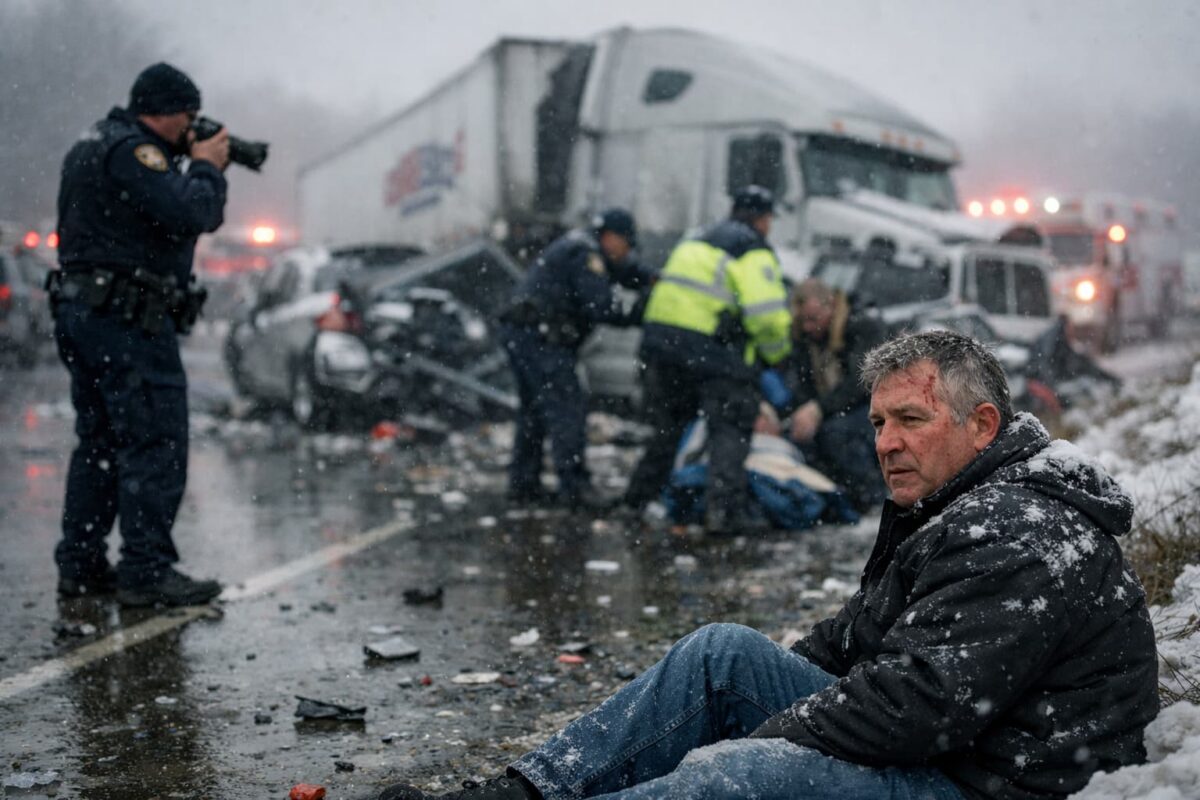 Comparative fault in Michigan multi‑vehicle truck pileups is the rule that decides how much of a chain‑reaction crash is legally placed on you and how much is assigned to the truck driver, trucking company, or other motorists.
 If that percentage of fault crosses Michigan’s 50‑percent line, you lose the right to recover pain and suffering damages, even when your injuries are life‑changing.
For someone hurt in the middle of a pileup, comparative fault in Michigan multi‑vehicle truck pileups isn’t just an abstract legal idea—it’s what turns evidence into real money or a sharply discounted claim.
A Michigan truck accident lawyer can use ECM data, reconstruction, and insurance records to push your share of fault down and the responsible parties’ share up, which may dramatically change the outcome of your case.
Contact us online, and let us safeguard your rights and future.
Key Takeaways for Michigan Multi-Vehicle Truck Accident Fault
- Under MCL 600.2959, Michigan bars recovery of non-economic damages like pain and suffering if the injured person bears more than 50% of the fault for the accident.
- Economic damages such as medical bills and lost wages remain recoverable even when the injured person shares fault, though the amount is reduced by their percentage of responsibility.
- Michigan largely eliminated joint and several liability in most negligence cases, meaning each defendant typically pays only their allocated percentage of fault rather than the entire judgment.
- Trucking companies may share liability with their drivers through vicarious liability, negligent hiring practices, or failures in vehicle maintenance and cargo loading.
- Evidence from Electronic Control Modules, Electronic Logging Devices, and accident reconstruction analysis often plays a critical role in establishing fault percentages in complex pileup cases.
How Does Michigan's Comparative Fault System Work?
Michigan's approach to shared fault differs from some neighboring states, and the distinctions matter significantly for injured drivers. The state uses what legal professionals call "modified comparative fault with a 51% bar." This framework divides responsibility among all parties and limits certain types of recovery based on the injured person's share of blame.
The 51% Threshold for Non-Economic Damages
MCL 600.2959 establishes the critical dividing line. If a jury or court determines that you bear more than 50% of the fault for the accident, Michigan law bars you from recovering non-economic damages. Non-economic damages include compensation for pain and suffering, emotional distress, and loss of enjoyment of life. An injured driver who is 51% at fault receives nothing for these categories, while someone at exactly 50% may still pursue non-economic compensation.
How Fault Percentages Reduce Your Recovery
Even when your fault falls below the 50% threshold, your percentage of responsibility reduces your total recovery proportionally. If your damages total $100,000 and you bear 30% of the fault, your recovery drops to $70,000. This reduction applies to both economic and non-economic damages under MCL 600.2957.
How Is Fault Allocated Among Multiple Parties?
Multi-vehicle truck accidents rarely involve just two parties. A typical chain-reaction pileup on I-96 might include the commercial truck driver, the trucking company, two or three passenger vehicle drivers, and possibly the injured person. Michigan law requires courts and juries to assign fault percentages to each party whose conduct contributed to the collision.
The Allocation Process
When a case proceeds toward trial, the jury receives a fault allocation form listing all parties. The jury must assign a percentage of fault to every person whose conduct contributed to the injury, including the plaintiff. All fault percentages together must total 100%. The plaintiff's percentage reduces their recovery, and each defendant is responsible for paying only their assigned share.
Michigan's Approach to Joint and Several Liability
Michigan largely eliminated joint and several liability in most negligence cases. In general, each defendant pays only their percentage of fault, though limited statutory exceptions apply in certain types of cases. If a trucking company bears 40% fault and another driver bears 30%, the trucking company pays 40% of your damages and the other driver pays 30%. You may not collect the full amount from whichever defendant has deeper pockets.
This rule creates practical challenges when one at-fault party has minimal insurance or assets. The defendant with greater resources may not cover the shortfall left by an underinsured co-defendant.
What Causes Chain-Reaction Truck Pileups?
Multi-vehicle truck crashes follow recognizable patterns that affect how fault is ultimately allocated. The initial triggering event matters, but so does each subsequent driver's response to changing conditions. Several common scenarios lead to the pileups that occur on Michigan highways.
The following factors frequently contribute to chain-reaction truck collisions:
- Reduced visibility from fog, snow, or heavy rain that prevents drivers from seeing slowed or stopped traffic ahead
- Following distances that are too short for conditions, especially for commercial trucks that require significantly longer stopping distances
- Sudden braking by a lead vehicle that creates a cascade of rear-end impacts through a line of traffic
- Jackknife events where a truck's trailer swings outward, blocking multiple lanes and trapping vehicles
- Speed differentials in construction zones or areas with sudden traffic slowdowns
These patterns create complex fault scenarios because the first impact is not always the most legally significant. A driver who rear-ends a stopped vehicle may bear less fault than the truck driver three vehicles back whose excessive speed prevented any chance of stopping.
When Does a Trucking Company Share Liability?
Commercial truck accidents often involve claims against both the individual driver and the trucking company that employs them. Several legal theories allow injured parties to pursue the company directly, and these claims may significantly affect the total compensation available.
Vicarious Liability for Driver Conduct
Trucking companies typically bear responsibility for the negligent acts of their drivers while those drivers are performing their job duties. This vicarious liability means the company answers for accidents caused by their drivers during deliveries, pickups, or other work-related travel. The company's deeper insurance coverage often becomes the primary source of compensation.
Direct Negligence by the Carrier
Beyond vicarious liability, trucking companies may face direct claims for their own failures. Negligent hiring occurs when a company employs a driver with a dangerous driving history or inadequate credentials. Maintenance failures that leave unsafe trucks on the road create direct liability. Federal regulations from the FMCSA establish specific requirements for vehicle inspection, maintenance, and driver qualification that form the basis for many of these claims.
Hours-of-Service Violations
Federal hours-of-service rules limit how long commercial drivers may operate without rest. When a fatigued driver causes a pileup after exceeding these limits, both the driver and the company that pressured or permitted the violation may share fault. Electronic Logging Devices now track compliance automatically, creating a detailed record that investigators may examine.
What Evidence Affects Fault Allocation in Truck Pileups?
The evidence available in multi-vehicle truck accidents often exceeds what exists in typical car crashes. Commercial trucks carry technology that records operational data, and the scale of pileup crashes typically triggers a thorough investigation.
Electronic Data From the Truck
Modern commercial trucks contain Electronic Control Modules that function like flight recorders for vehicles. These devices capture speed, braking, acceleration, and other data from the moments before and during a collision. Electronic Logging Devices track hours of operation and may reveal whether the driver exceeded legal limits. This electronic evidence often provides objective facts that contradict or confirm witness accounts.
Accident Reconstruction Analysis
Complex multi-vehicle crashes frequently require accident reconstruction to establish the sequence of events. Reconstruction specialists examine vehicle damage patterns, debris fields, skid marks, and electronic data to determine how the collision unfolded. Their analysis helps assign fault percentages by clarifying which driver's actions triggered the chain reaction and which subsequent drivers failed to respond appropriately.
Police Reports and Scene Documentation
Multi-vehicle accident scenes generate extensive police documentation, including diagrams showing vehicle positions and impact points. Officers interview multiple drivers and witnesses, creating a contemporaneous record of each party's account. While police reports do not conclusively establish fault, they provide important evidence that influences negotiations and trial testimony.
Contact us online, and let us safeguard your rights and future.
How Does No-Fault Insurance Interact With Fault Claims?
Michigan's no-fault insurance system operates separately from fault-based claims, but both systems affect injured drivers in multi-vehicle truck accidents. MCL 500.3101 establishes the no-fault framework that provides certain benefits regardless of who caused the collision.
PIP Benefits and Fault
Personal Injury Protection coverage pays medical expenses, wage loss benefits, and replacement services through your own insurance policy. These benefits flow without regard to fault, meaning you receive them even if you caused the accident. PIP claims proceed on a separate track from any fault-based claim against other drivers or trucking companies.
The Serious Impairment Threshold
To pursue pain and suffering damages against at-fault parties, Michigan law requires your injuries to meet the serious impairment threshold under MCL 500.3135. Injuries must affect an important body function and impact your ability to lead your normal life. Multi-vehicle truck accidents often produce injuries that satisfy this threshold, but the requirement adds another layer to the legal analysis.
FAQs for Michigan Multi-Vehicle Truck Accident Fault
What happens if the at-fault truck driver has minimal insurance?
Commercial trucks must carry higher insurance minimums than passenger vehicles, but coverage limits may still fall short of total damages in catastrophic pileups. When the primary at-fault party lacks sufficient coverage, your recovery may be limited to their policy limits plus any amounts from other at-fault parties. Your own underinsured motorist coverage may provide additional protection.
Does dashcam footage from other vehicles help establish fault percentages?
Video evidence from any vehicle involved in or witnessing the pileup may significantly influence fault allocation. Dashcam footage often captures the sequence of events more reliably than witness memory alone. Attorneys frequently seek footage from all vehicles and nearby traffic cameras when building multi-vehicle accident cases.
What if weather conditions caused the pileup rather than any specific driver?
Weather alone does not cause accidents, but it does affect the standard of care each driver must exercise. All drivers have a duty to adjust their speed and following distance for conditions. Juries may assign fault to drivers who failed to reduce speed in fog, snow, or rain, even when the weather contributed to poor visibility.
May I pursue a claim if I was cited at the scene?
A traffic citation does not automatically establish fault for civil liability purposes. Citations reflect the officer's assessment at the scene, but civil fault allocation considers all available evidence. Drivers who received citations still pursue successful claims when evidence supports lower fault percentages than the citation might suggest.
How do investigators determine the sequence of impacts in a pileup?
Accident reconstruction specialists analyze damage patterns on each vehicle to determine which collisions occurred first and how subsequent impacts followed. Paint transfers, crush depths, and debris distribution all provide clues. This sequencing matters because a driver who was already stopped after being hit bears different responsibility than one who rear-ended a vehicle that had just struck another.
Can a driver who was pushed into another vehicle still be found at fault?
Yes, depending on the facts. In some pileups, a driver is struck from behind and pushed into the vehicle ahead. If that driver was stopped safely and had no reasonable opportunity to avoid the secondary impact, their percentage of fault may be minimal or zero. However, if evidence shows they were following too closely or failed to react appropriately before being hit, a jury may assign some share of fault. The sequence of impacts and available reaction time often determine the outcome.
When Multiple Parties Share Blame, Thorough Analysis Matters
Multi-vehicle truck accidents create liability puzzles that require careful evidence gathering and strategic analysis. The percentage of fault assigned to you directly affects your ability to pursue compensation, making accurate allocation essential. Goodman Acker, P.C. offers complimentary consultations to help Michigan drivers understand how fault allocation applies to their specific situations.
Our attorneys work on a contingency fee basis, meaning you pay no fees unless we recover compensation for your claim. With offices in Southfield, Sterling Heights, and Grand Rapids, we serve clients throughout Michigan who need help sorting through complex multi-party accident claims.
If you were injured in a multi-vehicle truck pileup and have questions about fault allocation, contact Goodman Acker at 1-800-TRUSTED. We are available 24/7 to review the evidence, evaluate percentage exposure, and help you fight for fair compensation.