
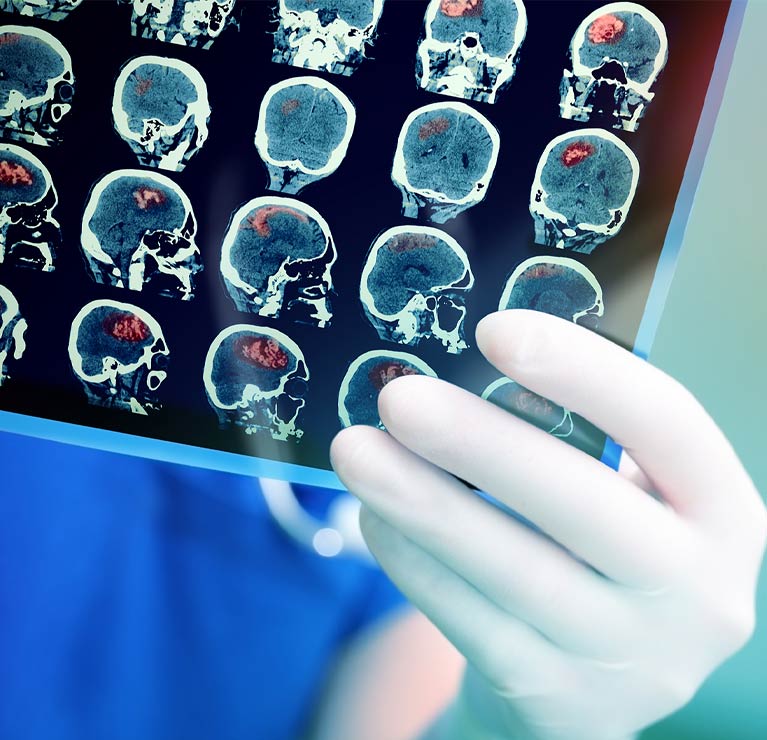
When someone else’s negligence causes a traumatic brain injury in Southfield, you can recover for your medical costs, lost income, and the long-term toll the injury takes, and Goodman Acker builds those claims.
The hard part is that a TBI is often invisible: no cast, no visible wound, just discharge papers and a list of symptoms. Within days, an insurance adjuster calls to ask how you are feeling, and that call is not a courtesy. It is the start of a strategy to document your injury as mild, inconsistent, or unrelated to the accident.
This is the defining challenge of TBI litigation in Michigan. The injury is real, the consequences can be permanent, and the opposing side will spend considerable resources arguing otherwise. Goodman Acker P.C. represents brain injury victims across Southfield, Oakland County, and Metro Detroit, and we understand exactly how insurers approach these claims and what it takes to counter them with evidence that holds up.
What a Traumatic Brain Injury Actually Is
A traumatic brain injury occurs when a sudden blow, jolt, or penetrating force disrupts normal brain function. The spectrum is wide. On one end are concussions that resolve in weeks with proper rest and monitoring. On the other are catastrophic injuries that alter personality, cognition, and independence permanently. Most TBI cases that reach litigation fall somewhere in the middle, and that middle ground is precisely where insurers push back hardest.
 Diffuse axonal injury matters in Southfield cases because it is commonly produced by the rotational forces of high-speed collisions on I-696, US-24, and the Southfield Freeway. It often produces no findings on a standard CT scan, which insurers treat as proof that nothing serious happened, even though the long-term effects on memory, behavior, and movement can be permanent.
Other serious TBI types, including subdural hematoma, contusions, and skull fractures, each present and progress differently and call for a different evidentiary approach to prove their full impact on your life.
Why These Cases Are Hard to Prove and Why That Matters
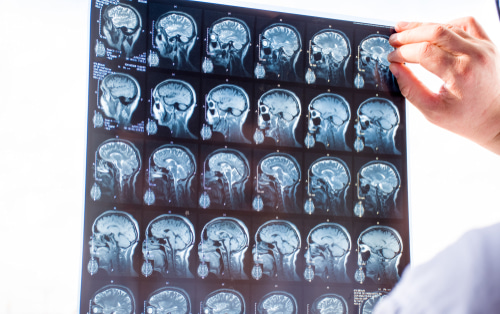
A broken leg shows on an X-ray. A TBI often does not. Mild to moderate brain injuries, which represent the majority of litigated cases, frequently produce normal or near-normal imaging results even when the functional damage is significant.
Neuropsychological testing, which measures cognitive performance across memory, processing speed, attention, and executive function, is often the most compelling evidence of injury in these cases. So is testimony from people who knew you before the accident and can describe what changed.
In many TBI cases, early emergency room records do not capture the full extent of cognitive impairment. This creates a gap between initial treatment notes and later specialist findings that insurers often exploit.
Closing that gap requires prompt follow-up care and consistent reporting of symptoms over time. Even subtle changes in memory, speech, or concentration can become critical evidence when properly documented by treating providers and specialists familiar with brain injury assessment.
Insurance companies know this evidentiary landscape as well as we do. Their standard response to a soft-tissue or mild TBI claim is to argue that your symptoms are subjective, that the imaging is negative, and that your difficulties preexisted the accident.
Our brain injury attorneys work with neurologists and neuropsychologists who understand how to document brain injuries in terms that courts find credible, and we anticipate the preexisting condition argument early so it does not gain traction.
The other factor that shapes TBI litigation specifically is timing. Symptoms of a brain injury often worsen or become apparent days after the accident. People underestimate their condition at the scene, decline certain evaluations, and then find themselves trying to explain a gap in their medical records. Consistent documentation from the earliest possible point is not just medically important. It is legally essential.
Michigan Law and Brain Injury Claims
Michigan’s no-fault system covers initial medical expenses and a portion of lost wages through Personal Injury Protection insurance after a motor vehicle accident, regardless of fault.
Under MCL 500.3145, PIP claims are generally subject to a one-year limitation period tied to either the date of the accident or when allowable expenses are incurred, though certain tolling rules and prior payment of benefits can affect how this deadline applies. PIP does not compensate for pain, suffering, or lost quality of life. To recover those damages, you must pursue a separate third-party negligence claim against the at-fault party.
That third-party claim is available when your injury meets the threshold of serious impairment of body function under MCL 500.3135. Traumatic brain injuries, including those involving cognitive deficits that substantially affect your ability to work, concentrate, or manage daily life, consistently satisfy that standard in Michigan courts. The question is not usually whether a TBI qualifies. The question is whether it is documented thoroughly enough to withstand a challenge.
The general statute of limitations for personal injury claims in Michigan is three years from the date of the accident under MCL 600.5805(2). Missing this deadline ends your right to sue, regardless of how serious the injury is.
If a government entity is involved, Michigan law may require a notice of intent under MCL 600.6431 or other notice provisions depending on the type of public body, and strict compliance with these requirements is often necessary before filing suit. Our attorneys treat every deadline in your case as non-negotiable from the day you hire us.
While symptoms of a traumatic brain injury may develop or worsen over time, Michigan’s statute of limitations for personal injury claims generally runs from the date of the accident, making early medical documentation and legal review essential.
Do not assume the three-year window gives you unlimited time to act. Evidence degrades, witnesses become harder to locate, and the connection between your current condition and the original accident becomes more difficult to prove the longer you wait.
What Compensation Covers in a TBI Case
Economic damages in a brain injury claim account for the documented financial losses the injury caused and will continue to cause. Medical expenses include emergency treatment, imaging, neurological and neuropsychological evaluation, surgery where applicable, rehabilitation, ongoing therapy, and long-term psychiatric care if the injury produces lasting mood or behavioral disorders.
Lost wages cover both the income you have already missed and, critically, the reduced earning capacity you may carry for the rest of your working life. For severe TBIs that require in-home care or assistive devices, those costs are calculated forward across your life expectancy.
Non-economic damages reflect what does not appear on any bill. The cognitive fog makes it difficult to do your job. The personality changes your family has absorbed without fully understanding why.
The activities you gave up because you can no longer tolerate noise, crowds, or sustained concentration. Loss of consortium claims, which recognize the toll on a spouse or close family member, require careful, credible presentation to reach their full value.
Goodman Acker has recovered millions of dollars for Michigan injury victims, including a $15.3 million verdict in an auto accident case. Results may vary. Prior case outcomes do not guarantee similar results. We evaluate every category of loss methodically so that nothing is undervalued at the negotiating table or at trial.

What Goodman Acker Brings to a TBI Case
Brain injury litigation is not general personal injury work. It requires attorneys who understand the medical literature, know which experts can explain neurological damage to a jury clearly, and have handled the specific insurance tactics that appear in TBI claims.
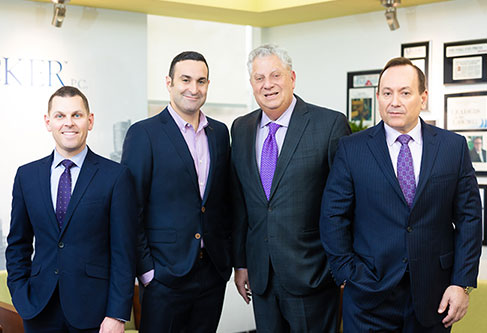 Our firm has 150 years of combined legal experience, a 99% success rate on motor vehicle claims, and recognition from Super Lawyers, AV Martindale-Hubbell Peer Review, and the National Trial Lawyers Top 100.
We work on a contingency fee basis, which means you pay nothing unless we recover. We are available evenings and weekends for urgent matters. Our team includes an attorney fluent in Arabic and Aramaic, which reflects the community we actually serve in Southfield. Cases receive direct attorney involvement, not intake staff managing files from a distance.
Our office is at Two Towne Square, Suite 444, Southfield. Call 248-861-8100 or contact us online for a free case evaluation.
What Southfield TBI Clients Ask Before They Hire Us
The ER said my CT scan was normal. Does that mean I don’t have a real TBI case?
A normal CT scan does not rule out a traumatic brain injury. Diffuse axonal injuries and many mild to moderate TBIs produce no visible findings on standard imaging. Neuropsychological testing, functional MRI, and detailed symptom documentation often reveal significant deficits that a CT scan misses entirely. Insurance companies use normal imaging as their first line of defense in TBI claims. Our attorneys prepare for that argument from the beginning, not after it surfaces.
What if my symptoms got worse over time rather than appearing immediately after the accident?
Delayed and progressive symptoms are well-documented in TBI medicine, and Michigan courts have recognized this reality. That said, the limitations clock in Michigan generally runs from the date of the accident under MCL 600.5805(10), not from when symptoms became apparent. Seek medical attention as soon as neurological symptoms appear, and contact our office so we can assess exactly where your timeline stands and what steps to protect your claim.
The insurance company says my cognitive problems are from anxiety or a preexisting condition. How do we respond to that?
It is the most common defense in mild-to-moderate TBI cases, and it succeeds only when the medical documentation is thin. It fails when your records establish your baseline function before the accident and a specific change after it. Neuropsychological testing is powerful here, because it produces objective results that are hard to pin on anxiety alone. We build that causation record early, before the insurer can set its own narrative.
My injury happened at a business, not in a car accident. Does Michigan’s no-fault system still apply?
No-fault PIP coverage applies specifically to motor vehicle accidents. A TBI caused by a slip and fall, a workplace accident, or a premises liability incident follows different rules. You would pursue a direct negligence claim against the responsible party, and different statutes of limitations and notice requirements may apply depending on who owns the property or employs the parties involved. The legal path is different, but the medical and evidentiary demands are the same.
How long will my case take?
It varies. TBI cases take longer than routine injury claims because the full extent of a brain injury can take months or years to assess. Settling before your condition stabilizes risks accepting less than your long-term needs require, so we do not push clients toward early settlement to close files. The timeline turns on your medical situation, the evidence, and how the other side responds.
When the Injury No One Can See Is the One That Changed Everything
A traumatic brain injury leaves marks that do not show in photographs or scans. They show how long it takes you to finish a sentence, how you react to a crowded room, and what your family quietly absorbs every day. The legal system does not compensate for that automatically. It requires documentation, medical expertise, and attorneys who know how to translate a neurological reality into a damages figure that reflects what you have actually lost.
Goodman Acker’s Southfield brain injury attorneys have built and litigated these cases through every stage of the process. Call 248-861-8100 for a free case review. The consultation costs nothing, and what you learn about your options is something the insurance company would prefer you never found out.

LEGALLY REVIEWED BY BARRY J. GOODMAN
Barry J. Goodman has devoted his professional life to keeping courthouse doors open for victims seeking justice. Always a tireless advocate for his own clients, Goodman sees his responsibility as a Detroit personal injury attorney in a broader sense as well. [ Attorney Bio ]

ABOUT GOODMAN ACKER
Why Choose Us