

Most people injured on a SMART bus don’t realize they’ve already started a countdown. Michigan law gives you just 60 days to serve written notice on the transit authority before your right to sue for pain and suffering is permanently gone.
That deadline doesn’t pause while you’re in the hospital. It doesn’t extend because you didn’t know about it. And the attorneys at the Suburban Mobility Authority for Regional Transportation know exactly how often injured riders miss it.
Goodman Acker P.C. handles bus accident cases across Oakland County and Metro Detroit from our office in Southfield, two miles from SMART’s district headquarters. We know this agency, we know how these claims move, and we know that the clock starts the day of the crash.
The 60-Day Rule: The Single Biggest Legal Trap in Michigan Bus Cases
If a SMART, DDOT, or other regional transit authority vehicle caused your injuries, Michigan law requires written notice to the transit authority within 60 days under MCL 124.419. This notice is separate from filing a lawsuit and must include basic details about the crash, the date and location, and the injuries involved.
Courts have treated this requirement as strictly enforced, and missing it can seriously limit or bar a tort claim for pain and suffering against the transit authority.
 Miss that window, and Michigan courts have consistently held that injured riders forfeit their right to bring a tort claim for non-economic damages: pain, suffering, emotional distress, and loss of quality of life.
No-fault PIP benefits are governed by MCL 500.3145, which generally imposes a one-year time limit for claiming benefits, though certain exceptions and tolling rules (legal pauses that can stop the clock) may extend or affect that timeline depending on when medical treatment is received and when benefits were first paid.
The Michigan Supreme Court addressed the relationship between these two timelines directly in Atkins v. SMART, confirming that the 60-day notice requirement applies strictly to tort claims, not to no-fault benefit applications. Our attorneys handle both simultaneously, so neither deadline is treated as secondary.
For claims involving state-operated transportation systems or other state agencies, additional notice requirements may apply under MCL 600.6431, including a six-month notice period. However, most Metro Detroit transit cases involving SMART or DDOT do not fall under the Court of Claims system and are governed by different liability rules.
If a SMART or DDOT bus injured you, do not wait for the 60-day notice window to close. Call Goodman Acker today for a free case review and we will serve the notice and protect both deadlines for you. 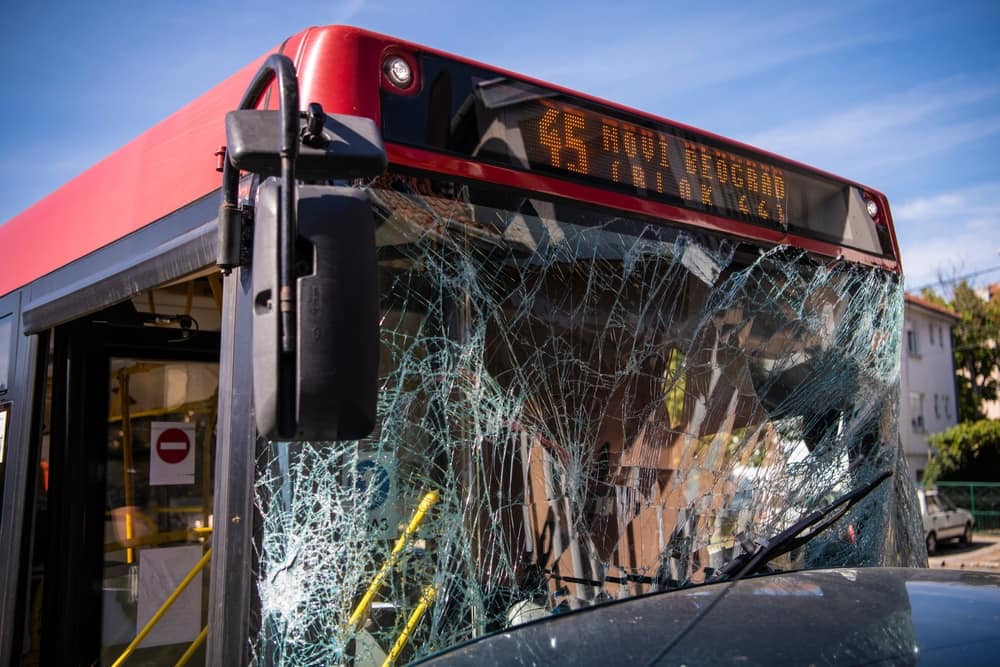
How Transit Authorities Handle Early Claims
Transit authorities like SMART typically route early claims through internal risk management teams and third-party administrators rather than directly through courtroom litigation. This means your initial notice is often reviewed not just for legal sufficiency, but also for potential liability exposure and claim value.
In practice, early submissions are sometimes minimized or delayed in response unless they are supported by strong documentation. This is why the quality of your initial notice matters as much as timing. A properly prepared notice can preserve your rights and prevent procedural disputes later in the case.
Who Carries Legal Responsibility After a Southfield Bus Crash
Liability in bus cases rarely lands in one place. A SMART bus doesn’t just have a driver. It has a transit authority with supervisors, dispatchers, maintenance contractors, and safety compliance officers whose decisions shaped that ride. Identifying who failed, and proving it with the right documentation, is where these cases are won or lost.
The driver is the most visible target, but not always the most legally significant one. Distracted driving, fatigue from shifts that exceeded reasonable limits, impairment, or failure to observe a traffic signal can all support a negligence claim against the operator directly.
But if SMART failed to enforce rest period policies, ignored flagged mechanical problems, or placed an inadequately trained driver on a high-demand route, the agency’s own conduct becomes the stronger theory of liability.
Third-party drivers who forced a bus into a collision bear responsibility as well, and so can parts manufacturers when a component failure, including faulty brakes, worn tires, or a defective steering system, caused or worsened the crash, independent of anything the driver did. Infrastructure failures along Southfield corridors like Greenfield Road and Northwestern Highway can implicate road design authorities when a dangerous condition contributed to the accident.
Our attorneys move immediately after being retained to send evidence preservation demands to the transit authority. Dashcam recordings, driver hours-of-service logs, vehicle inspection reports, dispatch communications, and passenger manifests are all subject to internal retention policies that may allow deletion. Early legal action protects that record before it disappears.
Why Evidence in Bus Cases Disappears Quickly
Unlike standard car accident cases, bus crash evidence is controlled by government systems and private contractors with strict retention schedules. Dashcam footage, driver logs, GPS tracking data, and dispatch records may be automatically overwritten within weeks unless a formal preservation request is issued. In some cases, maintenance records and inspection reports are stored across multiple departments, making them harder to trace later.
This creates a significant early advantage for the transit authority if injured passengers delay action. Prompt legal intervention ensures critical evidence is preserved before it is lost or altered.

What Bus Crashes Actually Do to the People Inside Them
Public transit buses carry passengers with no seatbelts and few handholds. When a collision happens, seated and standing riders are thrown violently against seat backs, overhead rails, windows, and each other. The injuries that follow are rarely minor, even when the crash itself looks survivable from the outside.
Traumatic brain injuries are among the most serious outcomes, from concussions to severe injuries that can permanently affect memory, speech, and motor function. Spinal cord injuries producing partial or complete paralysis carry lifetime care costs that must be fully calculated before any settlement is accepted, because once you sign, that number is final.
Compression fractures of the vertebrae are a common injury for older riders, and they often carry higher long-term care costs that a claim must account for.
Soft tissue injuries to the cervical and lumbar spine present a different problem. They often fail to appear on initial imaging and then develop into months of chronic pain and functional limitation. Broken bones in the hands, wrists, and forearms are frequent in bus crashes.
Internal injuries from a crash may not be apparent right away, which is one reason prompt medical evaluation matters. Psychological injury, including PTSD and anxiety that makes it difficult to ride public transit, commute, or tolerate crowded spaces, is a legitimate and compensable consequence of a collision.
The gap between how you feel leaving the scene and how you feel three weeks later is real and legally significant. Medical documentation in those first weeks directly shapes what your non-economic damages claim can support.
Compensation in a Michigan Bus Accident Case
Economic damages in a bus accident claim cover the full documented financial impact of your injuries. That means emergency and ongoing medical treatment, surgical costs, physical and occupational therapy, prescription medications, in-home care or personal assistance, adaptive equipment, and lost income, both past and projected.
When injuries permanently reduce your earning capacity, that projected loss is calculated across your working life expectancy, not just the weeks you missed immediately after the crash.
Non-economic damages address the losses that don’t appear on a bill. Physical pain, emotional suffering, the activities you can no longer do, and the relational losses your family absorbs alongside you all factor into this category.
Michigan’s threshold injury standard under MCL 500.3135 requires that your injury constitute a serious impairment of body function before you can pursue non-economic damages against an at-fault party. Bus crash injuries, including spinal damage, traumatic brain injuries, and significant fractures, regularly satisfy that threshold.
Michigan personal injury law does not generally provide for punitive damages. In limited circumstances, courts may award exemplary damages (extra compensation for especially reckless conduct) when conduct is shown to be malicious or in deliberate disregard of others’ safety, but this standard is narrow and we will not overstate its likelihood to any client.
What we pursue in every case is a complete accounting of every economic and non-economic loss you have incurred, documented thoroughly enough that the other side cannot minimize it.
Goodman Acker has recovered millions of dollars for Michigan injury victims, including a $3 million verdict in a pedestrian accident case and a $2 million recovery in an Oakland County truck accident.

Why Goodman Acker Handles These Cases Differently
Bus accident cases against public transit authorities are specialized litigation. They require familiarity with governmental immunity law, evidence preservation procedures specific to transit agencies, and an understanding of how Oakland County courts assess these claims. This is not general personal injury work with a transit bus substituted in.
Our firm brings 150 years of combined legal experience to motor vehicle and transit cases, carrying a 99% success rate on motor vehicle claims. We have earned recognition from Super Lawyers, AV Martindale-Hubbell Peer Review, and the National Trial Lawyers Top 100.
Our contingency arrangement means you pay nothing unless we recover, so your financial situation does not determine whether you receive serious legal representation. We are available evenings and weekends for urgent matters because evidence does not wait for Monday morning.
Our team also includes an attorney fluent in Arabic and Aramaic, which matters in a city as culturally diverse as Southfield. Cases are handled with direct attorney involvement, not handed off to case managers reading from intake files.
Our office is at Two Towne Square, Suite 444, Southfield. Call 248-861-8100 or contact us online for a free case review.
Questions Southfield Bus Accident Clients Actually Ask
What evidence should I try to preserve after a bus crash?
If possible, take photos of the scene, your injuries, and the bus number. Keep medical records, witness contacts, and any communication from the transit authority. Bus companies often overwrite video footage quickly, so legal requests to preserve evidence should be made as early as possible.
Can passengers on a bus claim against both the driver and the transit authority?
Yes. Claims often involve multiple parties, including the driver, the transit authority, and sometimes third parties like other motorists or maintenance providers. Liability depends on who had control and who contributed to the crash.
I was not a passenger. A SMART bus hit my car at an intersection. Do the same rules apply?
For your tort claim against SMART, yes. The 60-day written notice requirement under MCL 124.419 applies regardless of whether you were inside the bus or struck by it from outside. No-fault PIP rules for your medical expenses and lost wages will run through your own auto insurer first. Our attorneys work through both tracks from the start.
Why do bus accident cases take longer than regular car accident claims?
These cases often involve government agencies, multiple layers of responsibility, and strict notice rules. Investigating bus data, maintenance records, and driver logs also takes time, which affects how quickly a case can be resolved.
Can SMART simply settle for a fixed amount and cap what I can recover?
No. Transit authorities are not private insurers with standard policy limits. Claims against SMART involve governmental liability and follow different financial and procedural rules than claims against a private company. What you can recover depends on your specific injuries, documented losses, and how the claim is built, which is exactly what a case-specific analysis from our attorneys provides.
The 60-Day Clock Is Already Running
If a SMART bus or other transit vehicle injures you in or around Southfield, the most consequential legal deadline you face is not the three-year statute of limitations most people associate with personal injury cases. It is the notice requirement that arrives in 60 days. Clients who call Goodman Acker early preserve options that clients who wait often lose for good.
Our Southfield bus accident attorneys have taken these cases through investigation, negotiation, and trial. We know how transit authorities respond to claims, and we know what a complete recovery actually requires. Call 248-861-8100 today for a free case review, or contact us online to start. With the 60-day notice clock running, the sooner we hear from you, the more of your claim we can protect.

LEGALLY REVIEWED BY BARRY J. GOODMAN
Barry J. Goodman has devoted his professional life to keeping courthouse doors open for victims seeking justice. Always a tireless advocate for his own clients, Goodman sees his responsibility as a Detroit personal injury attorney in a broader sense as well. [ Attorney Bio ]


ABOUT GOODMAN ACKER
Why Choose Us